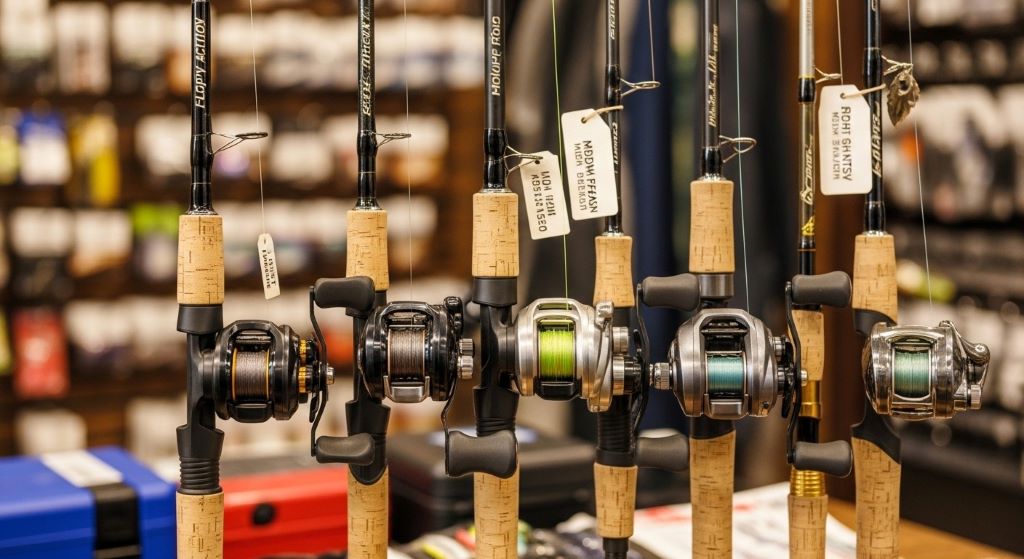
Selecting the right bass fishing rod can make the difference between a successful day on the water and constant frustration. Many anglers own multiple rods because different lures require different rod characteristics to perform optimally. Understanding how to match your rod to your lure will improve your casting accuracy, increase your hook-up ratio, and make fishing more enjoyable overall.
The bass fishing industry offers countless rod options, which can overwhelm beginners and experienced anglers alike. However, once you understand the fundamental principles behind rod selection, choosing the right tool becomes much simpler. This guide will help you navigate the decision-making process and build a versatile rod collection that covers your fishing needs.
Understanding Rod Power and Action
Before diving into specific lure categories, you need to understand two critical rod characteristics: power and action. These terms describe how a rod behaves under load, and they’re essential for matching rods to lures.
Power refers to the rod’s resistance to bending. It ranges from ultralight to extra heavy. This characteristic determines how much force the rod can handle and what size fish it’s designed to fight. A more powerful rod has a stiffer backbone that resists bending throughout most of its length.
Action describes where the rod bends along its length. Fast action rods bend primarily in the tip section. Moderate action rods bend further down toward the middle. Slow action rods bend throughout their entire length, creating a deep curve when loaded.
These two characteristics work together to determine how a rod performs with different lures. A heavy action rod with fast action, for instance, provides the backbone needed for strong hooksets while maintaining tip sensitivity for detecting bites.
Matching Rod Specifications to Lure Weight
Every rod has a specified lure weight range printed near the handle. This rating tells you the minimum and maximum lure weights the rod can cast effectively. Using lures outside this range causes problems.
Lures that are too light won’t load the rod properly during your cast. This results in poor distance and accuracy. You’ll struggle to feel the lure’s movement in the water, making it difficult to detect strikes or work the bait correctly.
Conversely, lures that exceed the rod’s maximum rating can damage the blank. You’ll also experience reduced casting distance because the rod can’t flex properly to generate power. Additionally, heavy lures on light rods create an unbalanced setup that feels awkward and tiring to fish all day.
Most rods have a sweet spot in the middle of their rated range where they perform best. Pay attention to this when selecting lures for a particular rod. If you frequently fish lures at opposite ends of the weight spectrum, you’ll need multiple rods to cover both applications effectively.
Rods for Topwater Lures
Topwater fishing provides some of bass fishing’s most exciting moments. However, these lures require specific rod characteristics to maximize your success. Most topwater baits work best with moderate to moderate-fast action rods.
The reason comes down to hook-up ratios. Bass often miss topwater lures on their first strike. A rod that’s too stiff will pull the bait away from the fish during these aggressive swipes. A rod with some give allows the bass to fully commit before you set the hook.
For walking baits like Zara Spooks or Sammy-style lures, a 6’6″ to 7′ rod with medium power works wonderfully. This length provides good casting distance while giving you the control needed to walk the bait effectively. The moderate action helps the lure dart side to side with less effort.
Buzzbaits and prop baits need slightly more backbone. A medium-heavy power rod handles these larger baits better and provides enough strength to drive hooks home through the hard roof of a bass’s mouth. However, you still want that moderate action to prevent pulling the bait away during strikes.
Popping rods for chuggers and poppers fall somewhere in between. A 7′ medium-power rod with moderate-fast action gives you the versatility to fish various topwater styles effectively. This setup provides adequate backbone for solid hooksets while maintaining enough flex to avoid pulling baits from short-striking fish.
Selecting Rods for Crankbaits
Crankbaits demand a different approach than most other lures. These baits dive and deflect off cover, creating constant tension on the rod. Therefore, you need a rod that absorbs this pressure while maintaining feel.
Crankbait rods typically feature moderate to moderate-slow actions. This characteristic serves multiple purposes. First, it helps prevent pulling treble hooks from a bass’s mouth during the fight. Treble hooks don’t penetrate as deeply as single hooks, making them more likely to tear free with a stiff rod.
Second, the softer action acts as a shock absorber when your crankbait deflects off rocks, stumps, or vegetation. This cushioning effect prevents the bait from being thrown off course and reduces the number of hooks you lose to snags.
For shallow-running crankbaits, a 7′ medium-power rod works well. The length aids casting distance, which is important because crankbaits often require long retrieves to reach their maximum depth. Medium power provides enough strength for most situations without being overly stiff.
Deep-diving crankbaits require medium-heavy power rods. These larger baits create more water resistance, demanding a rod with additional backbone. However, you still want that moderate action to maintain the shock-absorbing quality that makes crankbait fishing successful.
Many serious bass anglers who fish crankbaits frequently invest in lure specific rods designed precisely for this technique. These specialized rods optimize every characteristic for crankbait fishing, from the action to the guides to the handle length.
Rods for Soft Plastic Techniques
Soft plastics represent the most diverse lure category in bass fishing. The techniques range from finesse presentations to power fishing applications, requiring different rod setups for optimal performance.
Texas-rigged worms and creature baits fished in heavy cover need heavy action rods with fast or extra-fast actions. The stiff backbone allows you to drive hooks through thick plastic and set them firmly in the bass’s jaw. The fast tip provides sensitivity for detecting subtle bites while maintaining power in the lower section for pulling fish from vegetation.
A 7′ to 7’6″ rod handles most Texas rig applications effectively. The extra length helps you make longer casts and provides more leverage when fighting fish near the boat. Medium-heavy to heavy power ratings suit most situations, with heavier options for thicker cover and larger baits.
Carolina rigs require a different approach. Since the weight slides on the line separate from the hook, you need a rod that allows the fish to take the bait without feeling resistance. A 7’6″ to 8′ rod with medium-heavy power and moderate-fast action works beautifully for this technique.
Drop-shotting and other finesse techniques call for spinning rods with fast actions and light to medium-light power. These setups provide the sensitivity needed to detect light bites while offering enough backbone to set small hooks. A 6’6″ to 7’3″ spinning rod covers most finesse applications.
Choosing Rods for Jigs and Flipping
Jigs represent one of the most effective bass lures, particularly for targeting big fish in heavy cover. This technique demands powerful rods that can handle strong hooksets and pull fish from thick vegetation or wood.
Flipping and pitching jigs into dense cover requires heavy action rods with fast actions. These rods typically measure 7’3″ to 7’6″ in length, providing the leverage needed to muscle fish out of their hiding spots. The fast action keeps the tip sensitive for bite detection, while the powerful butt section handles the heavy work.
Many competitive anglers rely on tournament rods specifically designed for flipping and pitching. These premium rods feature high-modulus graphite construction that maximizes sensitivity while maintaining incredible strength. The investment makes sense for anglers who spend significant time using these techniques.
For swimming jigs in open water, you can use a slightly lighter setup. A 7′ medium-heavy rod with moderate-fast action provides enough power for solid hooksets while offering the flex needed to keep fish buttoned during jumps and head shakes.
Football jigs and dragging applications work best with 7′ to 7’6″ rods featuring medium-heavy to heavy power. The extra length helps you cover water efficiently and provides better feel when dragging the jig along bottom structure. A moderate-fast to fast action balances sensitivity with power.
Rods for Spinnerbaits and Chatterbaits
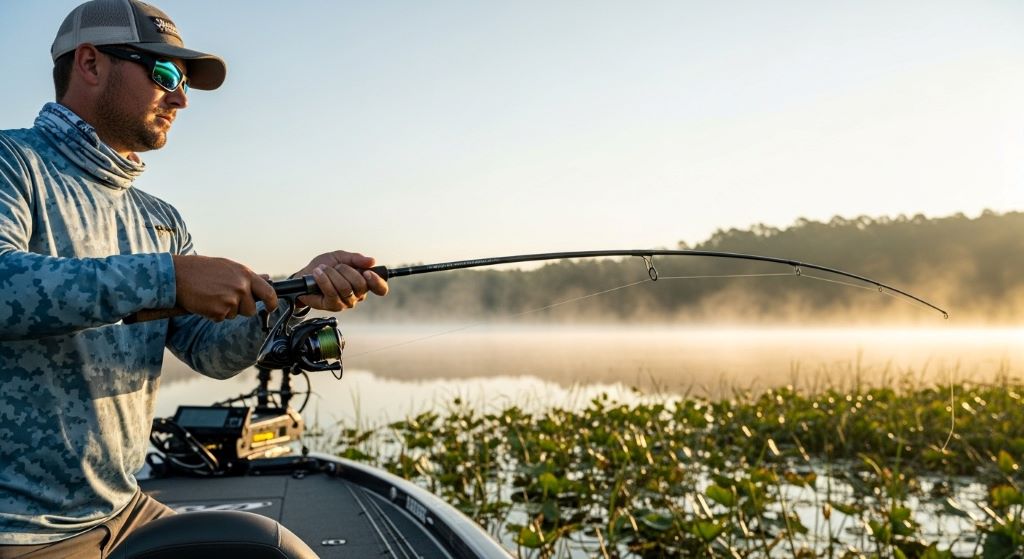
Spinnerbaits and chatterbaits share similar rod requirements, though subtle differences exist. These moving baits need rods that allow you to make long casts, maintain constant contact with the lure, and handle violent strikes.
A 7′ medium-heavy rod with moderate-fast action serves as an excellent starting point. This setup provides enough backbone to handle larger bladed baits while offering sufficient tip flex to prevent pulling hooks during fights. The length aids casting distance and helps you maintain better lure control throughout the retrieve.
When fishing spinnerbaits around heavy cover or using larger models, stepping up to a heavy power rod makes sense. The additional backbone helps you pull fish away from structure immediately after the hookset, preventing them from wrapping your line around cover.
Chatterbaits often generate more violent strikes than spinnerbaits. A rod with slightly more give helps prevent the treble hook trailer from tearing free during aggressive attacks. However, you still need adequate power for solid hooksets through the chatterbait’s heavy wire hook.
For burning spinnerbaits across shallow flats, consider a 7’3″ to 7’6″ rod. The extra length generates higher retrieve speeds without wearing out your arm. This technique produces explosive strikes, so ensure your rod has enough power to drive hooks home when bass crash your bait at high speed.
Rods for Jerkbaits and Swimbaits
Jerkbaits require specific rod characteristics to achieve the proper action. These baits work best when snapped sharply with the rod tip, then paused. The rod must be stiff enough to jerk the bait effectively while remaining sensitive enough to detect strikes during the pause.
A 6’6″ to 7′ medium-power rod with moderate to moderate-fast action handles most jerkbait applications. The shorter length provides better control for the rapid rod movements this technique requires. Medium power offers enough strength for hooksets while providing the flexibility needed to keep treble hooks pinned.
Hard swimbaits and glide baits need heavier tackle. These large lures can weigh several ounces and require powerful rods to cast effectively. A 7’6″ to 8′ heavy power rod with moderate-fast action provides the backbone needed for these big baits while maintaining enough tip action for proper lure swimming motion.
Soft swimbaits work best on rods matched to their weight and fishing technique. Small swimbaits on light jigheads need medium to medium-heavy spinning rods. Larger swimbaits weighing over an ounce require heavy casting rods with fast actions for driving hooks through the thick plastic and into the fish’s jaw.
Building a Versatile Rod Collection
Most bass anglers don’t need a dozen rods to catch fish consistently. Building a versatile collection starts with identifying the techniques you use most frequently, then adding rods as your skills and needs expand.
A solid starter collection includes three to four rods. Begin with a 7′ medium-heavy casting rod with fast action. This versatile setup handles Texas rigs, jigs, spinnerbaits, and many other applications effectively. Add a 7′ medium-power rod with moderate action for crankbaits and topwater lures.
Include a 6’6″ to 7′ medium-light spinning rod for finesse techniques. This rod covers drop-shots, small soft plastics, and other light-line applications. Finally, consider a 7’3″ heavy power rod for flipping and pitching if you frequently fish heavy cover.
As you develop preferences and specialize in certain techniques, you can add lure specific rods that optimize performance for particular applications. These specialized tools make sense once you’ve mastered the basics and want to squeeze every advantage from your equipment.
Understanding Rod Materials and Construction
Modern bass rods use primarily graphite, fiberglass, or composite materials. Each material offers distinct characteristics that affect performance, sensitivity, and price.
Graphite rods dominate the market because they’re lightweight and sensitive. High-modulus graphite provides incredible sensitivity for detecting light bites while remaining strong enough for powerful hooksets. However, graphite can be brittle, making these rods more susceptible to damage from impacts or overloading.
Fiberglass rods offer more durability and flex than graphite. The material’s forgiving nature makes fiberglass ideal for crankbait and topwater rods. Additionally, fiberglass rods typically cost less than comparable graphite models. However, they weigh more and offer less sensitivity than graphite.
Composite rods blend graphite and fiberglass to balance the strengths of both materials. These rods provide good sensitivity while maintaining the durability and flex characteristics of fiberglass. Many moderate-priced rods use composite construction to offer excellent value.
Tournament rods typically feature high-modulus graphite construction with advanced manufacturing techniques. These premium rods maximize sensitivity and reduce weight while maintaining impressive strength. The investment makes sense for serious anglers who spend significant time on the water.
Rod Length Considerations
Rod length affects casting distance, accuracy, leverage, and how the rod fits your fishing style. Longer rods generally cast further and provide more leverage for fighting fish. However, they’re less maneuverable in tight quarters and require more effort to fish all day.
Shorter rods excel in accuracy and handling. They’re ideal for fishing from kayaks, small boats, or when casting under docks and overhanging trees. A 6’6″ to 7′ rod provides a good balance of castability and control for most situations.
Medium-length rods from 7′ to 7’3″ represent the sweet spot for versatility. These rods cast well, offer good leverage, and remain comfortable to fish throughout the day. Most anglers build their collections around rods in this length range.
Long rods measuring 7’6″ to 8′ or more shine in specific situations. They’re excellent for long-distance casting, fishing from high boat decks, and techniques like Carolina rigging that benefit from extended reach. However, these rods can feel unwieldy if you’re not accustomed to them.
Conclusion
Choosing the best bass fishing rod for different lures involves understanding how rod characteristics affect lure performance and presentation. Power and action determine how a rod behaves under load, while length affects casting distance and control. Matching these specifications to your lures ensures optimal performance on the water.
Start with versatile rods that cover multiple techniques, then expand your collection as you develop preferences. Heavy action rods handle power fishing applications like flipping and pitching, while moderate action rods excel with crankbaits and topwater lures. Lure specific rods optimize performance for particular techniques when you’re ready to specialize.
Remember that the best rod is the one that feels comfortable in your hands and matches your fishing style. Don’t get caught up in collecting gear for its own sake. Instead, focus on building a practical collection that covers the techniques you actually use. Quality matters more than quantity when it comes to fishing rods.
Whether you’re fishing local tournaments or simply enjoying weekends on the water, having the right rod for each situation improves your success and enjoyment. Take time to handle different rods before purchasing, and don’t hesitate to ask experienced anglers or tackle shop professionals for guidance. Your investment in proper equipment will pay dividends in fish caught and memories made.
Frequently Asked Questions
What’s the difference between a casting rod and a spinning rod?
Casting rods feature larger guides on top of the blank and pair with baitcasting reels. Spinning rods have smaller guides underneath the blank and use spinning reels. Casting setups handle heavier lures and lines better, while spinning gear excels with light lures and finesse techniques. Most bass anglers own both types to cover different applications.
How much should I spend on a bass fishing rod?
Quality bass rods range from $50 to over $400. Beginners should start with rods in the $80 to $150 range, which offer good performance without breaking the bank. As your skills improve and you identify preferred techniques, investing in higher-end tournament rods makes sense. Focus on getting one quality rod rather than several cheap ones.
Can one rod handle all bass fishing techniques?
While a versatile medium-heavy rod with fast action covers many techniques adequately, no single rod excels at everything. Different lures perform better with specific rod characteristics. Most experienced anglers own at least three or four rods to optimize their presentation for various situations and lures.
How do I know if my rod’s action is right for my lure?
Pay attention to how the lure feels during casting and retrieval. If you’re getting poor distance or the lure feels “dead,” your rod action might not match properly. For treble-hooked lures, if you’re losing fish during fights, your rod may be too stiff. If you struggle driving hooks home, you might need more power.
Should I prioritize sensitivity or power when choosing a rod?
The answer depends on your fishing technique. Power fishing methods like flipping heavy cover require maximum power, even if you sacrifice some sensitivity. Finesse techniques demand high sensitivity to detect subtle bites. Most applications need a balance between the two. Match your rod choice to your primary fishing style and the techniques you use most often.
Related Topics:
How to Store Your Rods and Reels Without Ruining Them
How to Choose the Best Rod Mount for Boat, Kayak, or Shore Trip