If you’ve ever tried trimming hedges in a Texas summer, you know the drill: sweat dripping into your eyes by 9 a.m., an extension cord snaking through bushes, and a gas-powered trimmer that sounds like a lawnmower stuck in a blender. The heat isn’t just uncomfortable—it’s brutal on equipment, and it tests your patience. You need a tool that can handle the job without adding to the misery. That’s where a battery-powered option comes in. But not every model is built to handle 100-degree days, and picking the wrong one can leave you with a half-trimmed yard and a dead battery. This guide breaks down exactly what to look for when selecting a cordless hedge trimmer texas heat can throw at it, from motor power to battery management, so you can make a choice that actually holds up.
Key Takeaways
- Look for a brushless motor, as it runs cooler and is more efficient in high temperatures than brushed motors.
- Prioritize batteries with higher amp-hours (4.0Ah or above) and consider a second battery to avoid mid-job shutdowns.
- Select a blade length (18–24 inches) based on the size of your hedges—longer blades speed up big jobs but are harder to control for detail work.
- Check the tool’s operational temperature range; some batteries shut down to protect themselves in extreme heat, and not all handles this well.
- Weight and ergonomics matter; a 10-pound trimmer feels heavier after 30 minutes in direct sun, so look for balanced designs and proper grip angles.
Why Texas Heat Changes the Selection Process
Texas isn’t just hot; it’s relentless. For several months of the year, ambient temperatures routinely exceed 95°F, and surface temperatures on patios or near fences can soar much higher. This isn’t a minor detail—it affects how your equipment performs. Heat impacts battery chemistry, motor efficiency, and even the plastic housing of the trimmer itself.
When you shop for a trimmer without considering the climate, you might end up with a tool that’s perfectly fine in Ohio but struggles in Austin. The core issue is thermal management. Batteries generate heat during discharge, and when the ambient temperature is already high, the internal temperature of the battery pack climbs faster. If it gets too hot, the battery’s built-in management system (BMS) will shut it down to prevent damage. That means sudden stops in the middle of a hedge—exactly what you want to avoid.
Additionally, direct sun exposure can soften rubber grips and make plastic components feel fragile. While most trimmer bodies are made of reinforced nylon or ABS plastic, prolonged UV exposure and heat can degrade cheaper materials over time. A trimmer rated for continuous operation in high ambient temperatures is a safer bet for longevity in Texas.
Key Components to Evaluate Before Buying
Selecting the right trimmer isn’t just about picking the most expensive or the one with the longest reach. You need to match the tool’s capabilities with your specific yard conditions and the climate. Here are the critical components to examine.
Motor Type: Brushless vs. Brushed
The motor is the heart of the trimmer, and in Texas heat, a brushless motor is the smarter investment. Brushless motors use electronic controllers instead of physical brushes to transfer power. This design reduces friction, which means less heat generation. In practical terms, a brushless motor runs cooler, delivers more torque, and extends battery runtime compared to a brushed motor of the same size.
Brushed motors are cheaper, but they generate more heat under load. When you’re cutting through thick branches or dense ligustrum in 95°F weather, that extra heat can trigger thermal overload protection more quickly. You’ll find yourself waiting for the motor to cool down—time you don’t want to spend standing in the sun. If your budget allows, go brushless. It’s not just a performance upgrade; it’s a heat-management upgrade, To maintain your outdoor space sustainably all year round, explore our guide on Eco‑Friendly Lawn Care Tips for NYC Homeowners.
Battery System and Amp-Hour Rating
Battery voltage (18V, 40V, 60V, etc.) gets most of the marketing attention, but for heat performance, amp-hours (Ah) matter more. Amp-hours indicate the battery’s energy storage capacity. A 2.0Ah battery will drain faster than a 5.0Ah battery under the same load. In high heat, batteries drain faster because chemical reactions inside the cells speed up, but efficiency drops. A higher Ah rating gives you a buffer.
Here’s a practical rule: look for at least a 4.0Ah battery. If you have a large yard with long hedgerows, consider a 5.0Ah or higher. Also, check if the battery is compatible with other tools in the same brand’s ecosystem. Buying into a system (like Ryobi’s One+, DeWalt’s FlexVolt, or EGO’s 56V Arc Lithium) allows you to share batteries across tools, so you’re not stuck with a single-purpose battery that sits idle most of the year.
Blade Length and Tooth Gap
Blade length is about reach and efficiency. For most residential hedges (like boxwoods, hollies, or privet), a 20–24 inch blade is standard. A longer blade lets you cut a larger surface in a single pass, which reduces the total time spent in the heat. However, longer blades are heavier and harder to maneuver for intricate shaping.
Tooth gap is less obvious but equally important. Wider tooth gaps (around 3/4 inch) are better for thicker branches, while narrower gaps are for fine trimming. If your hedges have older, woody growth, a smaller gap will jam repeatedly. In the heat, jams are worse—you’re fumbling with the tool while the sun beats down. Assess your hedges’ growth patterns and choose a blade that matches.
Battery Management in High Temperatures
Even the best battery will shut down if it gets too hot. That’s not a failure—it’s a safety feature. Lithium-ion cells are sensitive to temperature extremes. Charging a hot battery is particularly dangerous, and most chargers have thermal sensors that prevent charging above a certain temperature. But for discharging (using the tool), the BMS typically allows operation up to about 140°F–160°F internally. In a Texas summer, it doesn’t take long to reach that threshold.
To maximize runtime, consider how you work. Start trimming early in the morning or later in the evening when ambient temperatures are lower. This isn’t just about your comfort—it’s about keeping the battery below its thermal cutoff. Also, don’t store batteries in a hot garage or shed. A battery sitting in a 120°F shed can lose capacity and may even be damaged permanently. Store them inside, in a cool, dry place, and let them cool down completely before charging.
If you have a large property and foresee long sessions, a second battery is almost essential. Run one battery, swap it out, and let the first one cool down in the shade while you continue working with the second. This workflow prevents downtime and keeps the job moving.
Ergonomics and Weight Under the Sun
Spending 45 minutes trimming hedges in 95°F heat is a physical workout. The weight of the trimmer, the grip angle, and the vibration levels all contribute to fatigue. A tool that feels nimble in the store can feel like a lead weight after 20 minutes.
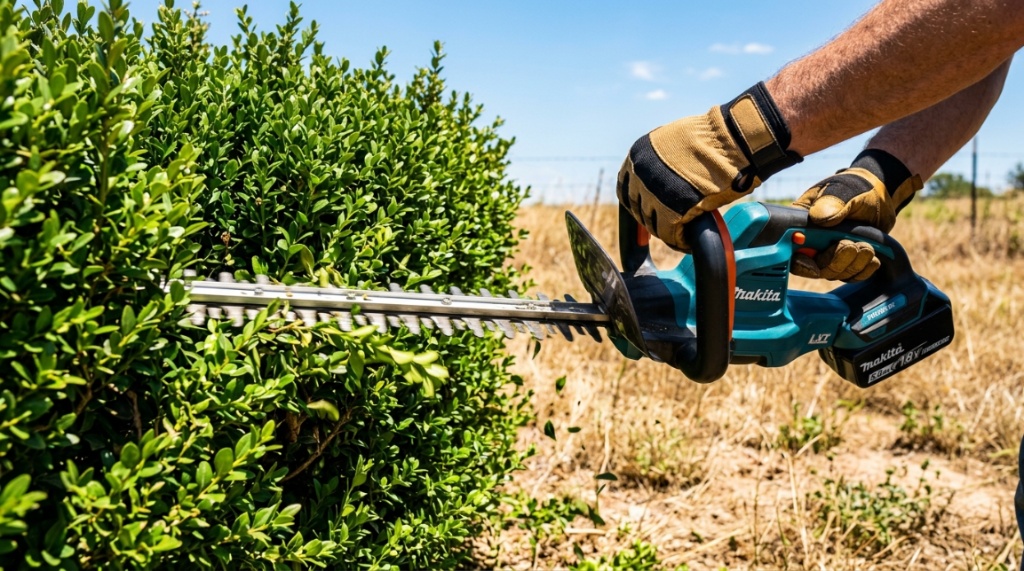
Look for a trimmer with a rear handle and a front auxiliary handle for two-handed control. This design reduces strain compared to a single-grip model. Also, pay attention to the angle of the cutting head. Many models offer a pivoting head (usually 0°, 45°, and 90°), which allows you to trim horizontally without twisting your wrists or shoulders. In the heat, reduced physical strain means you can finish the job faster.
Vibration is another factor. Prolonged exposure to vibration causes hand-arm vibration syndrome (HAVS), but even short-term, it makes your hands tired. Higher-end models often have anti-vibration mechanisms baked into the housing. If you have arthritis or any joint issues, this is worth the extra cost.
Compare Performance Features
When you’re narrowing down models, it helps to directly compare the features that affect heat performance and usability. Here’s a breakdown of the primary specifications to consider:
| Feature | What to Look For | Why It Matters in TX Heat |
|---|---|---|
| Motor | Brushless | Runs cooler, more efficient, less thermal throttling. |
| Voltage | 40V or higher | More power for dense cuts; reduces strain on the motor. |
| Battery Capacity | 4.0Ah or higher | Longer runtime before overheating; buffers against heat-related drain. |
| Blade Length | 20″–24″ | Fewer passes, less time in the sun. |
| Tooth Gap | ≥ 3/4 inch | Handles thicker branches without jamming. |
| Weight | Under 8 lbs (tool only) | Reduces fatigue; easier to hold overhead. |
| Pivoting Head | Yes (0°, 45°, 90°) | Allows natural wrist positions, avoiding awkward angles. |
| Battery Interface | Shared platform | Enables using other yard tools with same battery, saving money. |
This table isn’t exhaustive, but it highlights the most critical technical aspects. If you’re comparing specific models and want to see how top options stack up against each other, you can explore a curated list focused on the cordless hedge trimmer texas heat conditions, which breaks down real-world performance expectations.
Practical Usage Tips for Peak Heat
Having the right tool is half the battle. The other half is how you use it. Even with a high-end brushless trimmer and a 5.0Ah battery, you can still trigger thermal shutdown if you work against the tool.
Cutting Technique Matters
Don’t force the trimmer through thick branches. Let the blade do the work. If you push hard, you stall the motor, which draws more current, which generates more heat. Instead, use a slow, sweeping motion. For branches thicker than 1/2 inch, use a pruning saw first. Cutting branches that are too thick will overwork the motor and generate unnecessary heat.
Work in Shade When Possible
This sounds obvious, but it’s easily overlooked. If you have hedges on the west side of your house, trim them in the morning when they’re in the shade. East-side hedges are better in the afternoon. Keeping the trimmer (and yourself) out of direct sun reduces the starting temperature of the equipment, giving you more runtime before the heat builds.
Common Mistakes to Avoid in Texas Heat
Many people unknowingly shorten the life of their battery and trimmer by making a few avoidable mistakes. Here’s what to watch out for:
- Leaving the battery on the charger after it’s full: Most modern chargers trickle-charge, which keeps the battery topped off but also generates heat. Unplug it once charged.
- Using a low-voltage trimmer for dense growth: An 18V trimmer is fine for light shaping, but for thick, established hedges in Texas, it will constantly bog down. Overheating is the result.
- Ignoring blade lubrication: A dry blade creates more friction, which means more heat. Use a light oil (like 3-IN-ONE) on the blade and clean off sap and debris after each use.
- Storing the battery in the trunk of your car: Trunk temperatures can reach 180°F in Texas summers. This will permanently damage the battery cells. Carry it into the house if you’re running errands while the trimmer stays in the car.
Is a Higher Price Worth It for Heat Performance?
This is a fair question. Budget-friendly trimmers generally use brushed motors and smaller batteries. They work fine in temperate climates, but they’re more likely to struggle in Texas. The extra money for a brushless motor buys you thermal headroom. It’s not just about power; it’s about the ability to sustain power without cutting out.
Also, consider the build quality of the housing. Cheaper plastics are more prone to warping or discoloration from UV rays. Over a few years, a cheap trimmer stored in direct sunlight in a garage can become brittle. Premium models use UV-stabilized polymers and better heat-dissipating designs.
That said, you don’t need to buy the most expensive model on the market. Mid-range brushless trimmers from reputable brands often provide the best balance of price and heat resilience. Evaluate what your hedges require. If you have modest, well-maintained shrubs, a mid-tier model will handle the job. If you have tall, dense, and overgrown hedges, spend a little more to get the performance you need.
Frequently Asked Questions
Can I leave my cordless hedge trimmer battery in the garage during a Texas summer?
No. Garages in Texas can easily exceed 120°F. High temperatures accelerate battery degradation and can cause permanent capacity loss. Store batteries indoors in a climate-controlled environment, ideally between 40°F and 80°F.
Do brushless motors really last longer in heat than brushed motors?
Yes. Because brushless motors don’t have physical brushes creating friction, they generate less heat and experience less wear. This allows them to run more efficiently and maintain their performance at higher ambient temperatures compared to brushed motors.
What is the best cordless hedge trimmer blade length for tall hedges?
For tall hedges, a 22–24 inch blade is recommended. The longer blade allows you to maintain a level cut across a wider span before repositioning the tool, which speeds up the job and reduces how long you’re working in the heat.
How do I prevent my battery from dying in the middle of trimming?
Start with a fully charged battery, and avoid trimming during the hottest part of the day. Use a higher amp-hour battery and consider having a second one on hand so you can swap it out without waiting for the first battery to cool down.
Are all 40V batteries compatible with each other?
No. Batteries are brand-specific and often even platform-specific within a brand. You must use a battery that matches the trimmer’s voltage and proprietary connection. Sticking to one brand for multiple tools makes managing batteries easier.
Conclusion
Selecting the right cordless hedge trimmer for Texas heat boils down to smart thermal management and ergonomics. Prioritize a brushless motor to reduce heat generation, choose a battery with at least 4.0Ah capacity, and pick a blade length that suits your hedge size to minimize cutting time. Remember that your habits—like when you trim and how you store your battery—play a major role in preventing frustrating shutdowns. By focusing on these specific features and practical adjustments, you’ll get a trimmer that works with you, not against you, even when the pavement is sizzling. Take your time, compare specifications carefully, and invest in a tool that respects the demands of the Texas climate. Your hedges—and your sanity—will thank you.