Handheld vacuums have become essential tools for modern households. They offer convenience and flexibility that traditional vacuums simply cannot match. Whether you’re cleaning up pet hair from the couch, tackling crumbs in your car, or quickly addressing unexpected spills, a quality handheld vacuum makes these tasks effortless.
However, selecting the right model can feel overwhelming. The market is flooded with options, each claiming to be the best choice for your needs. Prices range from budget-friendly to premium, and features vary dramatically between models. Understanding what truly matters will help you make a smart investment.
This comprehensive vacuum features guide will walk you through everything you need to know. You’ll learn about the specifications that actually impact performance, what to look for in different situations, and how to identify quality products. By the end, you’ll have the knowledge to choose a handheld vacuum that perfectly fits your lifestyle.
Understanding Your Cleaning Needs
Before diving into technical specifications, take time to assess your specific requirements. Different households have different cleaning challenges, and the best vacuum for someone else might not be ideal for you.
Consider the surfaces you’ll be cleaning most frequently. Hard floors require different capabilities than carpets or upholstery. If you primarily clean smooth surfaces, you won’t need the same level of power as someone dealing with thick carpeting or embedded pet hair.
Think about the types of debris you encounter regularly. Fine dust requires different filtration than larger particles like cereal or pet food. Liquid spills demand wet-dry capabilities that standard models don’t offer. Pet owners face unique challenges with fur that clings to fabric and gets embedded in crevices.
Additionally, evaluate the spaces you’ll be cleaning. A handheld vacuum for car detailing needs different characteristics than one for quick kitchen cleanups. Stairs, furniture, and tight spaces each present their own challenges that certain designs handle better than others.
The frequency of use also matters. Daily users benefit from features like convenient charging stations and easy-to-empty dust bins. Occasional users might prioritize compact storage and simple operation over advanced features.
Power Source Considerations
The power source fundamentally affects how you’ll use your handheld vacuum. Each type has distinct advantages and limitations that influence overall convenience and performance.
Cordless models offer maximum flexibility. You can move freely without worrying about outlet locations or tangled cords. They’re perfect for cars, stairs, and quick cleanups anywhere in your home. Modern battery technology has significantly improved runtime and power, making cordless options increasingly practical.
However, cordless vacuums do have limitations. Battery life determines how long you can clean before recharging becomes necessary. Some models provide only 10 to 15 minutes of runtime, while premium options might offer 30 minutes or more. Consider whether this aligns with your typical cleaning sessions.
Corded handheld vacuums deliver consistent power without battery concerns. They’re ideal if you primarily clean in areas near outlets and don’t mind managing a cord. These models often cost less than comparable cordless versions and never lose suction as batteries drain.
The downside is obvious: limited mobility. Cords restrict your reach and can become tangled or caught on furniture. They’re less convenient for cars unless you have garage outlets or are willing to use extension cords.
Battery-powered models that use replaceable batteries offer a middle ground. You can swap in fresh batteries for extended cleaning sessions. However, this adds ongoing costs and requires keeping spare batteries charged and ready.
Evaluating Suction Power and Performance
Suction power directly impacts cleaning effectiveness, but understanding this specification requires looking beyond marketing claims. Manufacturers often use different metrics, making comparisons challenging.
Air watts provide the most meaningful measurement of suction power. This metric considers both airflow and vacuum pressure, giving you a clearer picture of actual cleaning ability. Look for models with at least 15 to 20 air watts for general household cleaning. More demanding tasks like pet hair removal might require 25 air watts or higher.
Motor power, usually measured in volts or watts, doesn’t tell the whole story. A powerful motor doesn’t guarantee effective cleaning if the overall design is inefficient. However, higher motor power generally indicates stronger potential performance when combined with good engineering.
Some manufacturers list suction in terms of pascal (Pa) or kilopascal (kPa). Higher numbers indicate stronger suction. Quality handheld vacuums typically range from 4,000 to 10,000 Pa. Premium models might exceed these numbers, though extremely high suction isn’t always necessary for typical household tasks.
Airflow, measured in cubic feet per minute (CFM), matters alongside suction strength. Good airflow helps transport debris from the nozzle through the system to the dust bin. Balanced airflow and suction create more effective cleaning than high suction with poor airflow.
Additionally, consider how the vacuum maintains power during use. Some models experience significant performance drops as batteries drain. Look for specifications or reviews mentioning consistent suction throughout the battery life.
Battery Technology and Runtime
For cordless models, battery performance significantly affects your experience. Understanding battery technology helps you choose a vacuum that meets your needs without frustrating limitations.
Lithium-ion batteries power most modern handheld vacuums. They offer excellent energy density, minimal self-discharge, and no memory effect. This means you can charge them anytime without worrying about reducing their overall lifespan. They also maintain consistent power output until nearly depleted.
Battery voltage impacts both power and runtime. Common options include 7.2V, 14.4V, and 18V batteries. Higher voltage generally means more power, but it also adds weight and cost. Consider whether you actually need maximum power for your typical cleaning tasks.
Runtime varies dramatically between models. Basic units might provide only 10 minutes, while premium options offer 30 minutes or more. However, maximum runtime often applies only to the lowest power setting. Using higher power modes significantly reduces operating time.
Charging time deserves attention too. Some vacuums fully charge in 2 to 3 hours, while others require 4 to 6 hours or even longer. If you frequently need your vacuum on short notice, faster charging becomes valuable. Some premium models include quick-charge features for partial charges in 15 to 30 minutes.
Battery indicators show remaining charge, helping you avoid running out of power mid-task. Simple LED lights work fine, though some models offer more precise digital displays. Either way, having some indication of battery status improves the user experience.
Filtration Systems and Air Quality
Effective filtration protects both the vacuum’s motor and your indoor air quality. Poor filtration allows fine particles to escape back into your environment, potentially aggravating allergies and creating dust problems.
HEPA filtration captures 99.97 percent of particles as small as 0.3 microns. This level of filtration is crucial for allergy sufferers and households with asthma concerns. True HEPA filters meet strict standards, while “HEPA-type” or “HEPA-style” filters may not perform to the same level.
Multi-stage filtration systems use several filters to trap different particle sizes. Typically, this includes a pre-filter for larger debris, a main filter for finer particles, and sometimes a final exhaust filter. This approach improves overall air quality and extends the life of each filter component.
Washable filters reduce ongoing costs and environmental impact. You can rinse these filters under water, let them dry completely, and reuse them multiple times. However, they eventually need replacement, typically every 6 to 12 months depending on usage.
Replaceable filters require periodic purchases but often provide superior filtration. Budget for these ongoing costs when calculating the total ownership expense. Some manufacturers offer subscription services delivering replacement filters on a schedule.
Additionally, consider how easy filters are to access and clean. Complicated filter maintenance reduces the likelihood you’ll do it regularly, which diminishes performance and air quality over time.
Dustbin Capacity and Emptying Mechanism
The dustbin holds collected debris until you empty it. While handheld vacuums naturally have smaller capacities than full-size models, variations still exist that affect convenience.
Capacity typically ranges from 0.2 to 0.7 liters for handheld vacuums. Larger capacity means fewer trips to the trash, but it also increases the vacuum’s size and weight. Consider your typical cleaning tasks when evaluating whether you need maximum capacity or prefer a more compact design.
Transparent dustbins let you monitor fill levels easily. You can see when emptying becomes necessary rather than guessing or waiting until performance declines. This visibility also helps you verify you’ve captured everything you were trying to pick up.
The emptying mechanism significantly affects user experience. One-touch systems let you release the bottom of the dustbin directly over a trash can, minimizing contact with dirt. Some designs require removing the entire dustbin, which can be messier and more time-consuming.
Look for dustbins that truly empty completely. Some designs leave debris trapped in corners or around the filter, requiring manual cleaning with each emptying. This frustration adds up over time and makes maintenance less pleasant.
Washable dustbins allow periodic deep cleaning. Being able to rinse the entire chamber helps maintain hygiene and prevents odor buildup, particularly if you sometimes vacuum wet messes or organic material.
Weight and Ergonomics
You’ll be holding this vacuum during use, so weight and comfort matter more than you might initially think. Poor ergonomics leads to hand fatigue and makes cleaning feel like a chore.
Most handheld vacuums weigh between 2 and 5 pounds. Lighter models reduce arm fatigue during extended use, particularly when cleaning overhead areas like ceiling corners or high shelves. However, extremely light models might sacrifice power or battery capacity.
Handle design affects comfort significantly. Look for handles with ergonomic shapes that fit naturally in your hand. Soft-grip materials prevent slipping and reduce pressure points. Some models feature multiple grip positions for different cleaning angles.
Balance influences how the weight feels during use. A well-balanced vacuum with the motor weight distributed properly feels lighter than a poorly balanced one of the same actual weight. If possible, hold the vacuum in a cleaning position before purchasing to assess balance.
Additionally, consider the reach and extension. Some handheld vacuums include extendable wands or long nozzles that let you access difficult areas without awkward positions. This feature reduces physical strain and expands the vacuum’s versatility.
The location of controls matters for convenience. Power buttons and mode switches should be easily accessible without requiring you to adjust your grip or use both hands. Thoughtful control placement makes operation smoother and more intuitive.
Attachments and Accessories
The right attachments transform a basic handheld vacuum into a versatile cleaning tool. However, more attachments aren’t necessarily better if they don’t match your actual needs.
Crevice tools are essential for tight spaces between cushions, along baseboards, and in car seat cracks. Long, narrow designs reach deeper into gaps, while shorter, wider versions work better for broader but still narrow spaces. Quality crevice tools have smooth interiors that prevent clogs.
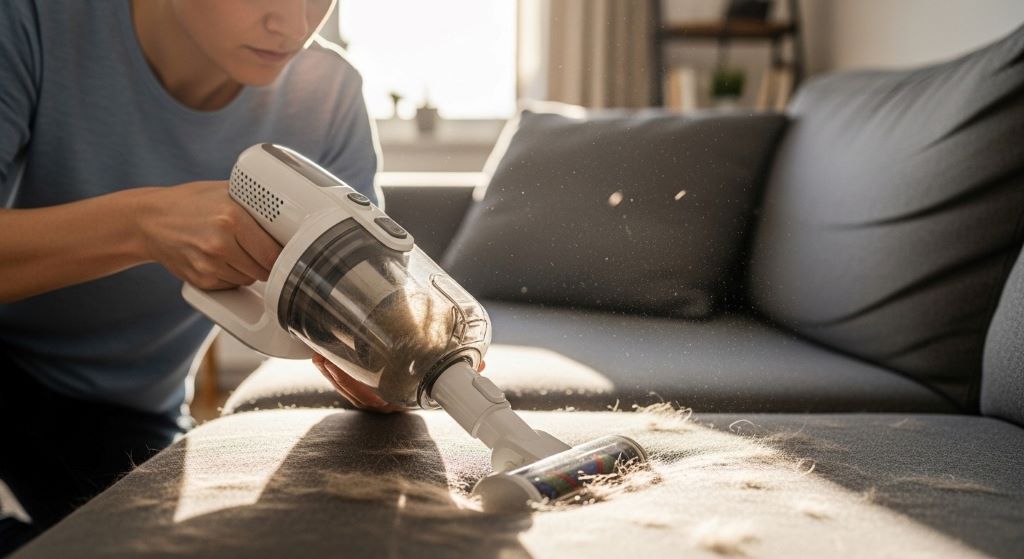
Brush attachments help with upholstery, lampshades, and delicate surfaces. Soft bristles loosen dust and hair without scratching. Some brush attachments motorize the bristles, significantly improving performance on fabric surfaces and pet hair removal.
Upholstery tools feature wider openings with fabric strips that capture hair and lint effectively. These attachments excel at cleaning furniture, car seats, and curtains. Look for designs that don’t clog easily with the materials you’ll be cleaning most.
Extension wands add reach for high shelves, ceiling fans, and other elevated surfaces. They also reduce the need to bend when cleaning floors or low furniture. Rigid wands provide stability, while flexible versions navigate around obstacles.
Pet hair tools use specialized rubber or silicone components that attract and grab fur. If you have shedding pets, these attachments make a dramatic difference in cleaning effectiveness. Some designs work better on certain fabric types, so consider your specific upholstery.
Storage for attachments keeps everything organized and accessible. Some vacuums include dedicated attachment holders on the charging station or the unit itself. Without organized storage, attachments tend to get lost or damaged.
Noise Levels and Operation
Noise might seem like a minor consideration, but it affects when and where you feel comfortable using your vacuum. Loud operation can disturb others, startle pets, and make cleaning less pleasant.
Handheld vacuums typically produce between 70 and 85 decibels. For context, normal conversation measures about 60 decibels, while a food blender reaches around 85 to 90 decibels. Lower numbers indicate quieter operation.
Motor design and overall construction quality influence noise levels. Well-engineered vacuums isolate vibration and include sound-dampening materials. Cheaper models often create more noise despite comparable motor power.
However, remember that higher suction power tips often correlate with increased noise. The most powerful vacuums naturally generate more sound. Decide whether quieter operation or maximum cleaning power matters more for your situation.
Some models offer multiple power modes that affect both performance and noise. Lower settings operate more quietly for light cleaning tasks or noise-sensitive times. Higher settings deliver maximum power when you need it and noise isn’t a concern.
Additionally, consider vibration alongside audible noise. Excessive vibration transfers to your hand and becomes uncomfortable during extended use. Quality construction minimizes vibration even at high power settings.
Durability and Build Quality
A handheld vacuum is an investment, and build quality determines how long it serves you effectively. Recognizing signs of quality construction helps you avoid models that will fail prematurely.
Housing material affects both durability and weight. High-quality plastics withstand impacts and daily wear without cracking or breaking. Premium models might incorporate metal components in high-stress areas. Avoid models that feel flimsy or show excessive flex when handled.
Motor quality varies significantly between brands and price points. Reputable manufacturers use motors designed for longevity with proper cooling and protection from debris. Cheaper motors might deliver adequate initial performance but fail after several months of regular use.
Seal integrity prevents air leaks that reduce suction and allow dust to escape. Quality vacuums maintain tight seals throughout the air pathway. Poor seals become obvious through reduced performance and visible dust emissions during operation.
Additionally, examine the connection points between components. Dustbins, filters, and attachments should fit securely without gaps or wobbling. Loose connections indicate poor tolerances that will likely worsen over time.
Warranty coverage reflects manufacturer confidence in durability. Premium brands typically offer one to two years of coverage, sometimes longer. Limited warranties or short coverage periods might signal lower quality expectations.
Price Ranges and Value Analysis
Handheld vacuums span a wide price range, from under thirty dollars to several hundred. Understanding what you get at different price points helps you find the best value for your needs.
Budget options under fifty dollars provide basic functionality. They work for light, occasional cleaning but typically compromise on suction power, battery life, and durability. These models suit users with minimal cleaning needs or those wanting a backup vacuum for quick tasks.
Mid-range models between fifty and one hundred fifty dollars offer significantly better performance and features. They generally include decent battery life, adequate suction for most household tasks, and reasonable build quality. This range provides the best value for regular users with typical cleaning needs.
Premium handheld vacuums exceeding one hundred fifty dollars deliver superior performance, advanced features, and exceptional build quality. They’re designed for demanding users, pet owners with serious hair challenges, or those who value the best available technology and convenience.
However, high price doesn’t automatically guarantee quality. Some brands charge premium prices based on marketing rather than superior engineering. Research reviews and compare specifications to ensure you’re paying for genuine improvements rather than just brand recognition.
Consider total cost of ownership beyond the purchase price. Factor in replacement filters, potential battery replacements, and accessories you might add later. Sometimes a higher initial investment costs less over the product’s lifetime.
Maintenance Requirements
Regular maintenance keeps your handheld vacuum performing optimally and extends its useful life. Understanding these requirements before purchase helps you choose a model you’ll actually maintain properly.
Filter cleaning or replacement forms the core of vacuum maintenance. Some users diligently maintain filters, while others prefer minimal upkeep. Choose a system that matches your preferences. Washable filters require more frequent attention but cost less long-term.
Dustbin cleaning prevents odors and maintains hygiene. Most models need rinsing every few weeks with regular use. Some designs make this easier than others. Complex dustbin shapes with hard-to-reach corners become frustrating to clean thoroughly.
Brush roll maintenance applies if your vacuum includes motorized brush attachments. Hair and fibers wrap around the roller, eventually reducing effectiveness. Look for designs that make accessing and cleaning the brush roll straightforward.
Additionally, battery care affects longevity. Lithium-ion batteries benefit from being stored partially charged rather than completely full or empty. Extreme temperatures also impact battery health. Consider whether you can store the vacuum in appropriate conditions.
Check for blockages periodically, especially if you notice performance decline. Hair, large debris, or accumulated dust can clog airways. Easy disassembly for blockage removal makes this maintenance task less frustrating.
Brand Reputation and Customer Support
The manufacturer behind your vacuum significantly impacts your long-term satisfaction. Established brands with strong reputations typically deliver better products and support.
Research brand history and customer feedback. Companies with decades of vacuum experience bring valuable engineering knowledge. Newer brands might offer innovation but lack the refined designs that come from extensive real-world testing.
Customer service quality becomes crucial if problems arise. Look for brands offering responsive support through multiple channels like phone, email, and chat. Check whether they provide helpful troubleshooting resources and replacement part availability.
Warranty terms reveal manufacturer confidence. Beyond warranty length, examine what’s covered. Some warranties exclude batteries or cover only manufacturing defects but not wear and tear. Understanding coverage details prevents surprises later.
Additionally, consider part availability. Quality brands maintain inventory of replacement parts like filters, batteries, and attachments. This support extends your vacuum’s useful life far beyond what’s possible with brands that discontinue support quickly.
Read both professional reviews and user experiences. Professional reviews provide technical analysis and performance testing. User reviews reveal real-world reliability, customer service experiences, and how the vacuum performs over months or years.
Making Your Final Decision
After considering all these factors, synthesize the information to make your choice. Create a prioritized list of your must-have features versus nice-to-have extras.
Compare your top three to five options directly using a simple chart. List the features that matter most to you and rate each model. This visual comparison often makes the best choice obvious.
Don’t overlook return policies. Purchasing from retailers with generous return windows lets you test the vacuum in your home with your actual cleaning challenges. What seems perfect in the store might reveal shortcomings during real-world use.
Additionally, watch for sales and promotions. Vacuum prices fluctuate, particularly around major shopping holidays. Setting price alerts or waiting for seasonal sales can save significant money without compromising on quality.
Remember that the most expensive option isn’t always the best for your situation. A moderately priced vacuum that perfectly matches your needs delivers better value than a premium model with features you’ll never use.
Conclusion
Choosing the right handheld vacuum requires balancing multiple factors against your specific needs and budget. This vacuum features guide has covered the essential considerations, from power sources and suction capabilities to filtration, ergonomics, and maintenance requirements. Understanding these elements empowers you to make an informed decision rather than relying solely on marketing claims or price.
Remember that the best handheld vacuum for you depends on your unique cleaning challenges. Pet owners need different capabilities than those doing occasional car cleanups. Allergy sufferers should prioritize filtration, while others might focus on runtime or attachment versatility. These suction power tips and feature evaluations help you identify what truly matters for your situation.
Take time to assess your needs honestly, research your options thoroughly, and don’t hesitate to ask questions before purchasing. A quality handheld vacuum simplifies cleaning tasks and maintains a cleaner living environment for years. Making a thoughtful choice now ensures you’ll be satisfied with your investment and actually use this valuable tool regularly.
The right handheld vacuum transforms quick cleanups from frustrating chores into simple tasks that take just minutes. With the knowledge you’ve gained from this guide, you’re prepared to select a model that will serve you well and make maintaining a clean home easier than ever.
Frequently Asked Questions
How much suction power do I really need in a handheld vacuum?
For general household cleaning like crumbs, dust, and light debris, 15 to 20 air watts provides adequate performance. Pet owners or those dealing with embedded dirt in carpets should look for 25 air watts or higher. Remember that suction power works alongside good airflow and brush design. A moderately powerful vacuum with excellent engineering often outperforms a higher-powered model with poor design.
Are cordless handheld vacuums as powerful as corded models?
Modern cordless technology has narrowed the performance gap significantly. Premium cordless models now rival corded versions in suction power, though they still face runtime limitations. Corded models deliver consistent power indefinitely, making them better for extended cleaning sessions. For most household quick cleanups, quality cordless vacuums provide sufficient power with the added benefit of portability.
How long should a handheld vacuum battery last before needing replacement?
Lithium-ion batteries typically maintain good performance for 300 to 500 charge cycles, which translates to roughly 2 to 3 years with regular use. Actual lifespan depends on usage frequency, charging habits, and storage conditions. Some premium models use replaceable battery packs, extending the vacuum’s overall life. Budget for eventual battery replacement when calculating total ownership costs.
Can handheld vacuums effectively clean pet hair from furniture?
Yes, but choose models specifically designed for pet hair. Look for motorized brush attachments and strong suction of at least 20 air watts. Specialized pet hair tools with rubber components work better than standard attachments. The vacuum’s airflow design also matters, as poor design can clog when handling large amounts of fur.
What’s the difference between HEPA and standard filtration?
HEPA filters trap 99.97 percent of particles as small as 0.3 microns, including pollen, dust mites, and pet dander. Standard filters capture larger particles but allow fine dust to pass through. If you have allergies or asthma, HEPA filtration significantly improves indoor air quality. However, HEPA filters require more maintenance and may slightly reduce suction compared to standard filters.
Related Topics:
When Air Duct Cleaners Near Me Catch What Filters Miss
What to look for in a deep fryer: Deep Fryer Buying Guide Before Choosing Elite Gourmet EDF2100