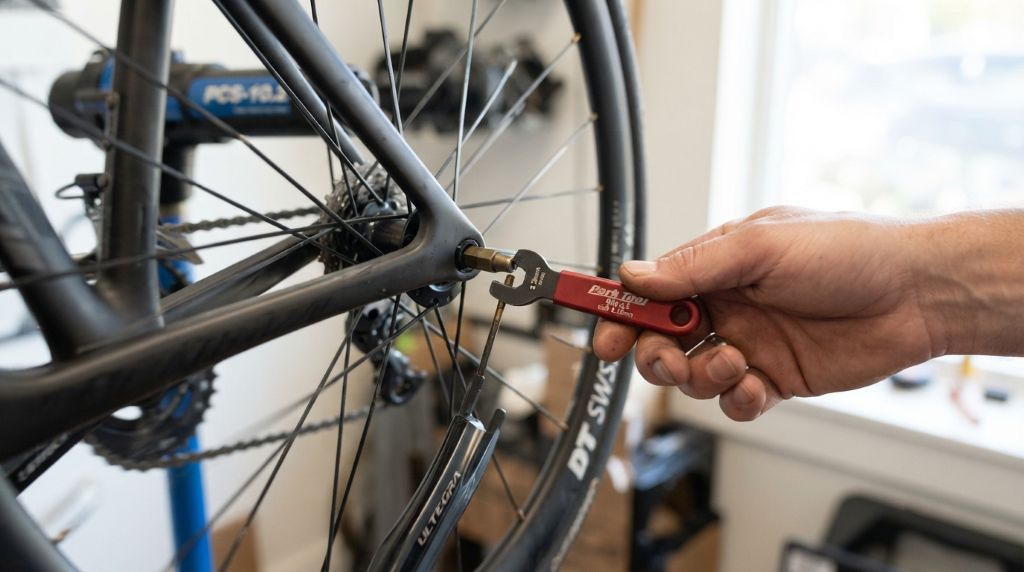
My first wobbly wheel taught me a hard lesson. I was ten miles from home when my front rim started rubbing the brake pad with every turn. I had no tools, no experience, and a long walk ahead of me. That day pushed me to learn wheel truing, and it turned out to be easier than I expected.
A bent or wobbly wheel is one of the most common bike problems. However, you do not need a bike shop to fix it. With a few basic tools and some patience, you can true a wheel at home in under an hour. This guide walks you through the entire process, step by step.
What Does It Mean to True a Bike Wheel?
Truing a wheel means adjusting the spoke tension so the rim spins evenly. A “true” wheel spins in a perfect circle. It does not wobble side to side or bounce up and down as it rotates.
Every wheel has two types of trueness. Lateral trueness refers to side-to-side movement. Radial trueness refers to up-and-down movement, sometimes called a hop. Both problems come from uneven spoke tension.
Spokes hold the rim in place around the hub. When one spoke loosens or another tightens too much, the rim shifts out of position. Over time, potholes, curbs, and general wear pull spokes out of balance. Therefore, even well-built wheels need occasional truing.
A well-trued wheel should have 0.5 millimeters or less of lateral deviation. That is roughly the thickness of five sheets of printer paper. It is a tiny margin, but it makes a noticeable difference in how smooth your ride feels. Understanding this target helps you know when to stop adjusting and when your wheel is good enough to ride.
Signs Your Bike Wheel Needs Truing
Not sure if your wheel actually needs attention? Watch for these warning signs before you start:
- The rim rubs against the brake pads at one point in each rotation.
- You see a visible side-to-side wobble when spinning the wheel.
- The bike feels unstable or shaky at higher speeds.
- One area of the rim bounces more than the rest.
- Spokes feel loose or make a clicking sound while riding.
Additionally, check your wheel after any hard impact, such as hitting a pothole or curb. Even a minor hit can knock a spoke out of tension. Riders who commute daily or ride rough trails should inspect their wheels every few months. Catching a small wobble early prevents bigger problems, like a cracked rim or a snapped spoke, down the road.
If you notice any of these signs, do not panic. Most minor wobbles are quick fixes. However, if the rim looks physically bent or dented, truing alone will not solve the problem, and you may need a rim replacement instead.
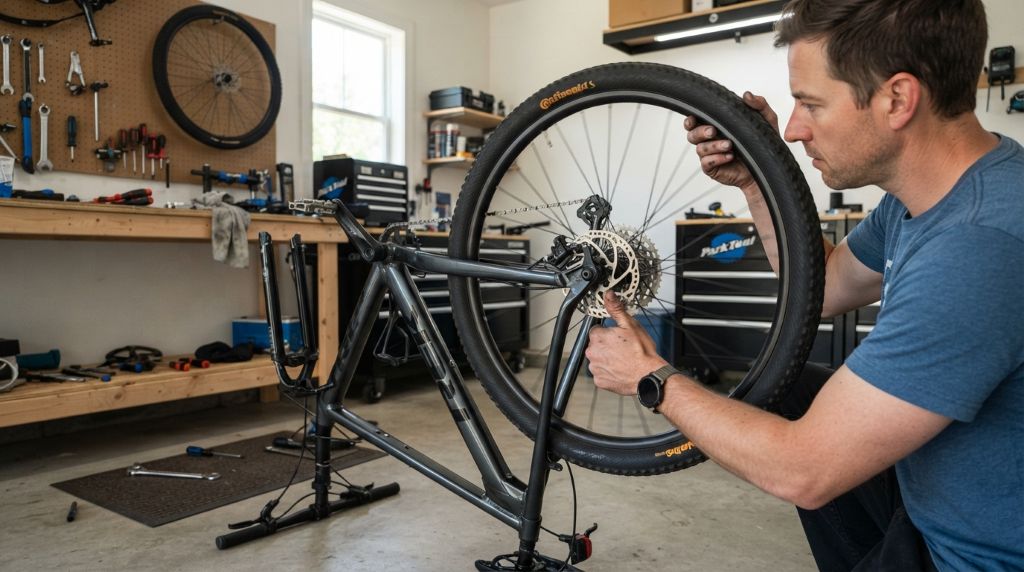
Tools You Need to True a Wheel at Home
You do not need an expensive workshop setup. A few affordable tools will handle most home truing jobs:
- Spoke wrench (matched to your nipple size)
- Truing stand, or your bike itself as a substitute
- A reference point, such as a zip tie or piece of tape
- Clean rag for wiping down the rim
- Optional: a spoke tension meter for precision
Spoke wrenches are not one-size-fits-all. Nipple sizes vary between wheel brands, so check your wheel’s specifications before buying one. Using the wrong size wrench is the fastest way to strip a nipple, which turns a simple fix into a bigger repair.
A dedicated truing stand makes the job easier, but it is not required. Flipping your bike upside down or placing it in a repair stand works just as well for small corrections. Many home mechanics use the brake pads as a natural reference point for spotting lateral wobbles. This setup costs nothing extra and works surprisingly well for beginners.
Step-by-Step: How to True a Bike Wheel at Home
Follow these steps in order for the best results.
- Clean and inspect the wheel. Wipe off dirt and check for cracks, dents, or bent spokes before you begin.
- Mount the wheel. Place it in a truing stand, or flip your bike upside down and secure the wheel in the frame.
- Set a reference point. Tape a pen or zip tie near the rim, or use your brake pad as a guide.
- Spin the wheel slowly. Watch where the rim moves away from your reference point.
- Identify the wobble direction. Note whether the rim pulls left, right, or bounces vertically.
- Adjust the spokes. Tighten spokes on the side opposite the wobble. Loosen spokes on the side the rim pulls toward.
- Make small adjustments. Turn each nipple a quarter-turn at a time, then spin and check again.
- Repeat around the wheel. Continue until the wobble falls within a few millimeters.
- Check radial trueness. Look for up-and-down hops and adjust both sides of the affected spokes equally.
- Do a final spin test. Confirm the wheel spins smoothly with minimal wobble before reinstalling it.
Work slowly and patiently. Rushing this process often creates new problems instead of fixing the original one.
Common Mistakes to Avoid
Beginners often make the same errors when truing a wheel for the first time. Avoiding these mistakes will save you time and frustration.
First, do not over-tighten a single spoke to fix a wobble. This creates uneven tension across the wheel and can pull other spokes out of alignment. Instead, spread small adjustments across several spokes.
Second, avoid using the wrong size spoke wrench. A loose-fitting wrench rounds off the nipple edges quickly. Once a nipple is stripped, it becomes very difficult to adjust, and you may need a professional’s help to remove it.
Third, do not ignore radial trueness while focusing only on lateral wobble. A wheel can look straight side to side but still bounce vertically. Check both directions before calling the job finished.
Fourth, resist the urge to rush. Small, quarter-turn adjustments work better than large ones. Overcorrecting almost always leads to a new wobble in the opposite direction, which wastes time and effort.
Finally, do not attempt to true a wheel with a cracked rim or badly bent spokes. Truing only adjusts tension. It cannot repair structural damage. Riding on a damaged rim increases the risk of a sudden failure.
When to Take Your Wheel to a Professional
Some wheel problems go beyond a simple home fix. If the rim has a visible crack, dent, or flat spot, take it to a bike shop instead. Truing will not repair physical damage to the rim structure.
Similarly, if several spokes are broken or extremely loose, the wheel may need to be rebuilt rather than trued. A shop mechanic can rebuild the wheel with new spokes and proper tension throughout. If you are also evaluating whether your current bike is worth repairing or replacing, learning how to find the best cheap mountain bikes without sacrificing quality can help you compare your options before investing in major repairs.
If you have tried adjusting spokes several times and the wobble keeps returning, the hub bearings might be worn or damaged. This issue sits outside the scope of basic truing and needs a trained eye. Do not force repeated adjustments on a wheel that will not hold true.
For riders with carbon rims, extra caution matters. Carbon is more sensitive to uneven tension than aluminum. If you are unsure, a professional inspection protects your investment and keeps you safe on the road.
Conclusion
Truing a bike wheel at home is a practical skill every cyclist should learn. It saves money, builds confidence, and keeps your rides smoother and safer. With the right tools and a patient approach, most wobbles are fixable in less than an hour.
Start small, work slowly, and check your progress often. Over time, you will develop a feel for spoke tension that makes future repairs even faster.
Have you trued a wheel at home before? Share your experience in the comments below, or pass this guide along to a fellow rider who could use it.
Frequently Asked Questions
How often should I true my bike wheels?
Check your wheels every few months, or after any hard impact like a pothole or curb strike. Riders who commute daily or ride rough terrain should inspect their wheels more often.
Can I true a wheel without a truing stand?
Yes. Flip your bike upside down and use the brake pads or a taped reference point as a guide. This method works well for small, minor adjustments.
Why does my wheel keep going out of true?
Repeated wobbles usually point to uneven spoke tension, a damaged rim, or worn hub bearings. If truing does not hold, a professional check is worth the visit.
How do I know which spoke to tighten?
Spin the wheel and watch the wobble against a reference point. Tighten spokes on the side opposite the wobble, and loosen spokes on the side it pulls toward.
Is it safe to ride on a slightly untrue wheel?
A very minor wobble is usually safe for short rides. However, ignoring it can wear down brake pads unevenly and stress the spokes, so fix it as soon as you can.