Creating a thriving aquarium goes beyond adding water and fish to a tank. A truly balanced ecosystem mimics nature, where all elements work together harmoniously. This guide will walk you through establishing a self-sustaining environment that keeps your fish healthy and your maintenance minimal.
Understanding Aquarium Ecosystems
An aquarium ecosystem functions like a miniature version of a lake or river. Every component plays a role in maintaining balance. Fish produce waste, beneficial bacteria break down toxins, and plants absorb nutrients while producing oxygen. When these elements work together properly, your aquarium becomes a stable environment.
Many beginners make the mistake of viewing their tank as just a container for fish. However, thinking of it as a complete ecosystem changes your approach. You start considering how each addition affects the whole system. This mindset leads to better decisions and healthier fish.
The Nitrogen Cycle Foundation
Before adding any fish, you must establish the nitrogen cycle. This biological process is crucial for fish survival. Fish waste and uneaten food release ammonia, which is toxic. Beneficial bacteria convert ammonia into nitrite, then other bacteria transform nitrite into less harmful nitrate.
Starting this cycle takes patience. Most aquariums need four to six weeks to develop enough beneficial bacteria. You can speed up the process by adding bacteria supplements or using filter media from an established tank. Testing your water regularly during this period helps you track progress.
Never rush this stage. Adding fish too early can result in ammonia spikes that harm or kill your aquatic pets. Therefore, patience during setup saves lives and money later.
Selecting the Right Tank Size
Tank size significantly impacts ecosystem stability. Larger volumes of water are more forgiving of mistakes. They dilute toxins better and maintain stable temperatures more easily. A 20-gallon tank is generally the minimum recommended size for beginners.
Smaller tanks require more frequent maintenance and careful monitoring. Water parameters can shift rapidly in limited volumes. Additionally, small tanks restrict your fish choices since many species need adequate swimming space.
Consider your available space and budget, but prioritize getting the largest tank you can accommodate. Your future self will appreciate the extra room as you expand your aquatic collection.
Creating a Natural Fish Habitat
Replicating your fish’s original environment helps them thrive. Research where your chosen species come from naturally. Some fish prefer rocky substrates, while others need sandy bottoms. Understanding these preferences guides your decoration choices.
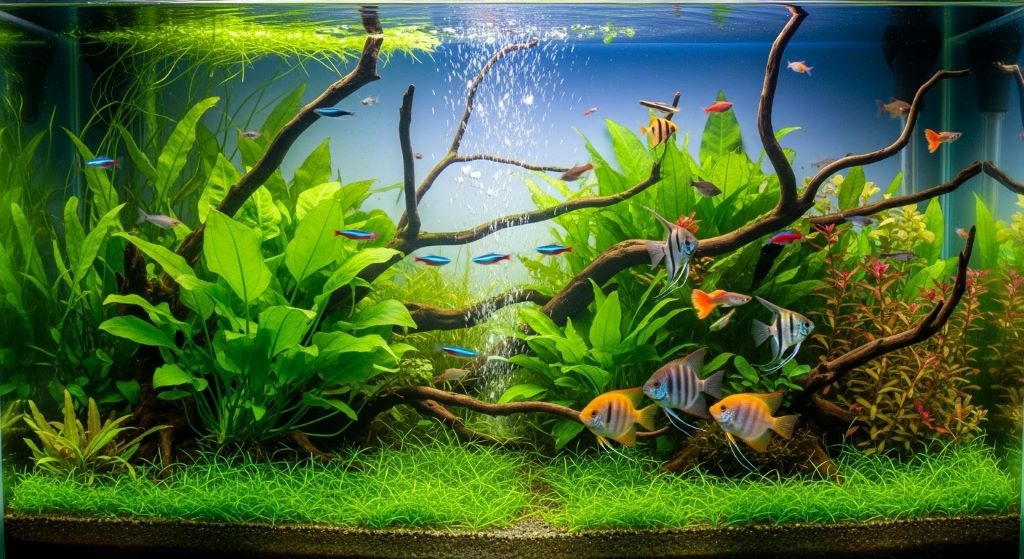
Caves, driftwood, and rock formations provide hiding spots that reduce stress. Fish feel more secure when they have places to retreat. However, avoid overcrowding the tank. Leave open swimming areas balanced with decorated sections.
The substrate you choose affects more than appearance. It hosts beneficial bacteria and anchors plants. Gravel works well for most setups, while sand suits bottom-dwelling species better. Choose based on your fish’s needs rather than just aesthetics.
Live Plants Benefits in Your Aquarium
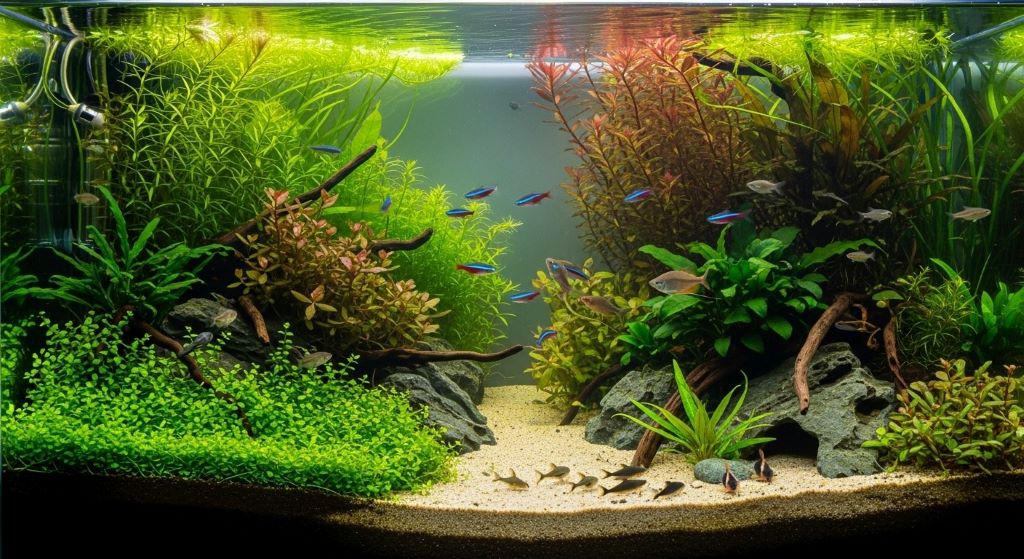
Incorporating vegetation transforms your aquarium into a dynamic ecosystem. Plants consume nitrates that would otherwise accumulate in the water. They also produce oxygen during daylight hours, supplementing what your filter provides. Moreover, plants offer natural hiding spots and spawning areas for fish.
Live plants benefits extend to algae control as well. By competing for nutrients, aquatic plants limit algae growth. This reduces the green film that often plagues tanks. Many hobbyists find that well-planted tanks need less frequent cleaning.
Starting with hardy species makes plant care manageable. Java fern, anubias, and java moss tolerate various conditions. These plants require minimal lighting and grow steadily without demanding fertilizers. As you gain experience, you can experiment with more challenging species.
Lighting Considerations
Proper lighting supports plant growth while maintaining day-night cycles for fish. Most aquatic plants need 8 to 10 hours of light daily. Too much light encourages algae, while insufficient light causes plants to decline.
LED fixtures have become the standard in 2026. They consume less energy and produce less heat than older options. Additionally, many models allow you to adjust intensity and color temperature. This flexibility helps you fine-tune conditions for your specific plants.
Consider adding a timer to automate your lighting schedule. Consistency benefits both plants and fish. It also prevents you from accidentally leaving lights on too long.
Filtration Systems Explained
Filters serve multiple purposes in maintaining water quality. They remove physical debris, provide surfaces for beneficial bacteria, and circulate water throughout the tank. Choosing the right filter depends on your tank size and stocking level.
Canister filters offer excellent filtration for medium to large tanks. They process water efficiently and can be customized with different media types. Hang-on-back filters work well for smaller setups and are easier to maintain.
Regardless of which type you choose, avoid over-filtering or under-filtering. Your filter should cycle the entire tank volume at least four times per hour. However, some fish prefer gentler current, so adjust flow rates accordingly.
Water Parameters and Testing
Maintaining stable water chemistry keeps fish healthy. Temperature, pH, ammonia, nitrite, and nitrate levels all matter. Most tropical freshwater fish thrive in temperatures between 75 and 80 degrees Fahrenheit.
Testing kits help you monitor these parameters. Check water weekly during the first few months, then reduce frequency as your tank stabilizes. Keep records of your readings to spot trends or problems early.
When adjustments are needed, make changes gradually. Sudden shifts stress fish more than slightly imperfect conditions. Small, consistent changes are always preferable to dramatic interventions.
Choosing Compatible Fish Species
Stocking your tank requires careful planning. Not all fish get along, and overcrowding creates problems. Research each species’ adult size, temperament, and requirements before purchasing.
The general rule is one inch of fish per gallon of water, but this oversimplifies things. A single 10-inch fish needs more than 10 gallons. Consider activity level, territorial behavior, and waste production as well.
Mixing fish from similar environments often works best. Amazon basin species typically share water parameter preferences. African cichlids prefer different conditions than Asian tetras. Matching fish to your setup increases success rates.
Establishing a Feeding Routine
Overfeeding is one of the most common mistakes in fishkeeping. Excess food decomposes, adding ammonia and nitrates to your water. Feed only what your fish can consume within two to three minutes.
Most adult fish do well with once-daily feeding. Some species benefit from twice daily in smaller portions. Additionally, consider fasting your fish one day per week. This mimics natural patterns and aids digestion.
Variety improves fish health and coloration. Rotate between flakes, pellets, frozen foods, and occasional treats. Different foods provide different nutrients, supporting overall wellness.
Regular Maintenance Schedule
Even balanced ecosystems need routine care. Weekly tasks include testing water and removing visible debris. Every two weeks, perform a 25 percent water change. This removes accumulated nitrates and replenishes minerals.
Monthly maintenance involves cleaning filter media and checking equipment function. Rinse biological media in old tank water, never tap water. Chlorine in tap water kills beneficial bacteria you want to preserve.
Trim plants as needed and remove dead leaves promptly. Decaying plant matter adds organic waste to your system. Keeping plants tidy maintains water quality and improves appearance.
Troubleshooting Common Problems
Cloudy water often indicates bacterial bloom or substrate disturbance. Bacterial blooms resolve on their own as the system stabilizes. Patience is usually the best remedy.
Algae growth signals an imbalance between light, nutrients, and plant growth. Reduce lighting duration, increase water changes, and add more plants to compete with algae. Manual removal also helps control outbreaks.
If fish show signs of stress or illness, test water immediately. Most fish health problems stem from poor water quality rather than disease. Correcting parameters often resolves issues without medication.
Advanced Ecosystem Enhancement
Once your basic ecosystem runs smoothly, consider adding complexity. Snails and shrimp serve as cleanup crews, consuming algae and leftover food. They add biological diversity while reducing maintenance.
CO2 injection boosts plant growth dramatically. However, it requires careful monitoring to avoid harming fish. Start without CO2 and add it only if you want more demanding plant species.
Creating specific biotope setups challenges experienced hobbyists. These tanks replicate particular natural habitats with appropriate fish, plants, and decorations. Biotopes offer educational value and stunning visual impact.
Seasonal Considerations
Even indoor aquariums experience seasonal effects. Room temperature fluctuations affect tank temperature. Summer may require fans or chillers, while winter needs reliable heaters.
Plant growth often slows during winter months due to reduced ambient light. You might need to adjust feeding amounts as fish metabolism changes with temperature. Being aware of these cycles helps you respond appropriately.
Long-Term Success Strategies
Successful aquarium keeping combines knowledge, observation, and patience. Watch your fish daily for behavioral changes. Early detection of problems allows prompt intervention.
Join online communities or local aquarium clubs. Experienced hobbyists offer valuable advice and support. Additionally, they might share plants or provide equipment recommendations.
Keep learning about aquatic ecosystems. New products and techniques emerge regularly. Staying informed helps you refine your approach and try new possibilities.
The Rewards of Balance
A well-balanced aquarium becomes easier to maintain over time. The initial setup requires effort, but established systems almost care for themselves. You spend less time on chores and more time enjoying your underwater world.
Watching fish behave naturally in a proper habitat brings satisfaction. Colors intensify, spawning behavior emerges, and fish display their full personality. These rewards make the initial investment worthwhile.
Conclusion
Creating a balanced freshwater aquarium ecosystem requires understanding how different elements interact. The nitrogen cycle provides the foundation, while live plants benefits include nutrient absorption and oxygen production. Building a natural fish habitat with appropriate decorations and substrate helps fish thrive. Proper lighting, filtration, and regular maintenance keep the system stable. By selecting compatible species, avoiding overfeeding, and maintaining consistent water parameters, you create an environment where fish flourish. Patience during setup and ongoing observation ensure long-term success. The result is a beautiful, self-sustaining aquatic ecosystem that brings joy with minimal intervention.
Frequently Asked Questions
How long does it take to establish a balanced aquarium ecosystem?
Most aquariums take four to six weeks to establish the nitrogen cycle and become ready for fish. However, achieving true ecosystem balance takes several months as plants establish, bacteria colonies mature, and all elements stabilize. Patience during this period prevents problems later.
Can I keep fish without live plants in my aquarium?
Yes, you can maintain fish without plants using artificial decorations and strong filtration. However, plants provide natural filtration, oxygen production, and stress reduction that artificial decorations cannot match. Even a few hardy plants improve water quality and fish health significantly.
How often should I change water in a balanced aquarium?
Even balanced systems benefit from regular water changes. Perform 25 percent water changes every two weeks for most setups. Heavily stocked tanks may need weekly changes, while lightly stocked planted tanks might extend to three weeks between changes.
What are the best beginner fish for a new ecosystem?
Hardy species like zebra danios, cherry barbs, and corydoras catfish tolerate slight water parameter fluctuations while your ecosystem stabilizes. These fish adapt well to various conditions and forgive beginner mistakes better than sensitive species.
Do I need special equipment for growing aquarium plants?
Basic plant growth requires only moderate lighting and standard aquarium conditions. Hardy plants like java fern and anubias thrive without special equipment. Advanced setups with demanding plants may benefit from CO2 injection and specialized lighting, but these additions are optional for beginners.
Related Topics:
How to Care for Betta Fish on Aquariums: Tips for a Happy, Healthy Pet
7 Secrets About Sustainable Aquarium Fish Sourcing Can’t Ignore