

Key Takeaways
- Verify the credentials, licenses, and specialized experience of the healthcare professionals delivering care.
- Ensure rigorous hygiene protocols and equipment sterility meet strict medical standards.
- Understand every ingredient in IV solutions, including sources and suitability for your health.
- Review provider reputation through testimonials, third-party reviews, and respected industry affiliations.
- Confirm the provider has robust emergency preparedness, clear protocols, and legal compliance mechanisms.
- Look for services that prioritize truly individualized care plans and continuous assessment.
With home-based wellness solutions seeing a remarkable rise in popularity, more people are turning to home IV therapy for its unmatched blend of convenience, comfort, and personalized care. Yet, entrusting your health and safety to a provider who comes directly to your home involves careful evaluation. To find home IV service that genuinely meets your needs, it’s essential to consider technical expertise, infection control, transparent communication, and technology, each vital in ensuring a safe experience. By understanding precisely what to look for in a home IV therapy provider, you can maximize the benefits of in-home treatment while minimizing potential risks. These detailed guidelines will help you make a well-informed decision, empowering you to prioritize your wellness confidently.
Verify Credentials and Experience
The cornerstone of a safe in-home IV therapy experience lies in the expertise of the professionals providing your care. Only trust providers who staff licensed and certified healthcare providers, such as registered nurses (RNs), nurse practitioners (NPs), or paramedics with up-to-date certification in IV therapy administration. A background in emergency medicine or infusion therapy adds more confidence, demonstrating that these professionals are adept at everyday procedures and comfortable managing rare complications. Reputable companies will present documentation—certifications, licensure, and continuing education records—upon request. Never hesitate to confirm a provider’s qualifications or ask about their on-the-job experience; a trustworthy provider welcomes these inquiries and is proud to show their credentials.
Assess Equipment Sterility and Hygiene Standards
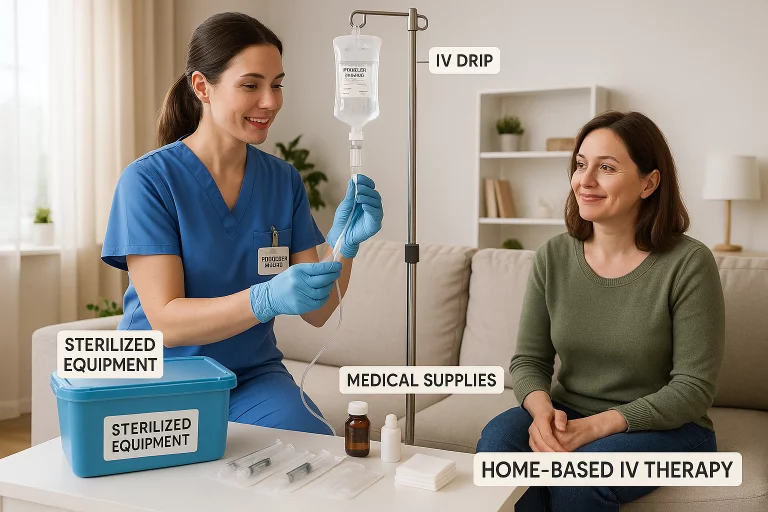
Maintaining the highest sterility standards is essential to prevent infection, a risk that comes with any intravenous procedure. Reputable home IV therapy providers rely exclusively on FDA-approved, single-use needles and catheters, and every component of the IV setup, from fluids to medication vials, must follow strict aseptic protocols. During preparation and administration, providers should thoroughly wash their hands, use medical-grade gloves, and disinfect the skin and surrounding area before insertion. Ask about their supplies’ origin and storage procedures; best practices require medical materials to be sourced through regulated suppliers and kept under temperature-controlled conditions to preserve safety. Before treatment, observe the provider’s workspace: a neat, organized environment with sanitized surfaces reflects their commitment to your well-being.
Understand IV Solution Ingredients
Understanding what is being infused into your body is vital to the safety and effectiveness of your therapy. Insist on complete transparency regarding every ingredient in your IV drip—fluids, vitamins, minerals, antioxidants, or medications. A reputable provider will not hesitate to show you ingredient labels, discuss the rationale for each component, provide detailed rationales for each component, and provide sourcing details. Suppliers adhere to quality assurance standards. If you have known allergies, sensitivities, or particular health concerns, these must be taken seriously and factored into your therapy plan. Open communication regarding ingredients ensures you’re not exposed to anything unsuitable or potentially harmful, while maximizing your treatment’s positive effects.
No two patients are the same, so avoid providers pushing a “cookie-cutter” approach to IV therapy. Before recommending a solution, skilled providers should thoroughly review your medical history, recent lab results, medications, and any allergies or sensitivities. IV formulations may support hydration, recovery, immune function, energy, or overall wellness, and should be tailored to your current needs and long-term health goals. Comprehensive clinics will welcome questions about how they customize formulations and adapt plans for new or evolving health information. If you want more information on evaluating IV solution quality and provider qualifications, refer to the Centers for Disease Control and Prevention’s provider safety page, which offers best practices for injection safety.
Evaluate Provider Reputation
Trustworthiness is greatly influenced by a provider’s standing in the community and among their clients. Reading independent reviews on third-party sites can provide valuable insight into punctuality, reliability, and the real-world quality of care. Look for feedback regarding staff demeanor, responsiveness to questions, and outcomes. High-quality providers are often affiliated with respected medical organizations or have endorsements from established healthcare partners. Don’t hesitate to ask for references or to seek firsthand testimonials from friends, family, or local social circles. A standout provider will have a demonstrable track record of professionalism, transparency, and patient satisfaction, which will help you feel secure when inviting them into your home.
Confirm Emergency Preparedness
Even the most experienced professionals can encounter unforeseen complications such as allergic reactions, vein irritation, or infiltration where fluids leak into surrounding tissue. Confirm that your provider has comprehensive emergency plans, from carrying up-to-date onsite emergency kits (including epinephrine, antihistamines, and more) to having clear protocols for rapid escalation and connection with local medical services. Ask if team members are trained in CPR, advanced first aid, and acute response measures relevant to IV therapy. Providers should explain what steps you or your household members should take if you feel unwell during or after the infusion, and they should remain readily accessible in case of follow-up concerns.
Review Legal and Ethical Standards
A reputable home IV therapy service complies with all local, state, and federal regulations, covering licensing, health privacy laws, and medical insurance requirements. Ethically sound practice means you will be presented with detailed consent forms, clear explanations about the risks and benefits of the therapy, and full accountability regarding managing your medical data. For your protection, always confirm that the provider carries appropriate liability insurance and holds current state licensure. Transparency in these legal and ethical safeguards is a regulatory requirement and a fundamental sign of a responsible, patient-centered organization.
Importance of Personalized Care Plans
Nothing is more reassuring than care tailored to your unique health needs. A responsible home IV therapy provider will begin every engagement with a comprehensive intake assessment, delving into your medical history, present conditions, current medications, allergies, and even lifestyle habits or recent changes in health. The result? A thoroughly tailored care plan that’s adapted as your health evolves. After each infusion, ongoing evaluation ensures continued safety and maximum benefit. Reliable providers don’t just stop after the visit—they schedule timely follow-ups and remain available to answer post-treatment questions, fine-tune future sessions, and address any concerns.
Communication and Transparency
Clear and honest communication is the foundation of trust and the key to a positive clinical experience. Your provider should offer detailed, easy-to-understand instructions on preparing for your IV session—what to eat, drink, or avoid—plus guidance on aftercare and activity limitations. Expect direct, jargon-free answers to all questions regarding ingredients, risk, procedure steps, and what to watch for after treatment. Top-tier services inform you about what’s being done and why, empowering you to participate actively in your wellness journey. This transparency reduces anxiety, promotes patient satisfaction, and ensures you reap the most significant benefits from your therapy.
The Role of Technology in Enhancing Safety
Modern technology has revolutionized the standard of care for home IV therapy, making every stage safer and more responsive. Look for providers who employ secure electronic health records, ensuring they have immediate access to your up-to-date medical history for continuity and accuracy. During and after your IV therapy session, digital monitoring tools can track your vital signs and alert professionals to even subtle changes in your status, allowing for swift response to potential issues. Telehealth platforms enhance safety by providing direct, on-demand communication between you and experienced clinical staff for urgent questions or unexpected symptoms between appointments. Leveraging these tools means enhanced peace of mind, better risk management, and a smoother overall experience.
In summary, safeguarding your health and ensuring peace of mind requires meticulous research, direct questions, and a willingness to walk away if a provider falls short of the highest standards. Use this trusted guide to find home IV service providers in your area who meet every standard outlined here. With the right provider, you can confidently embrace the comfort, customization, and convenience of personalized home IV therapy while protecting what matters most—your well-being.


