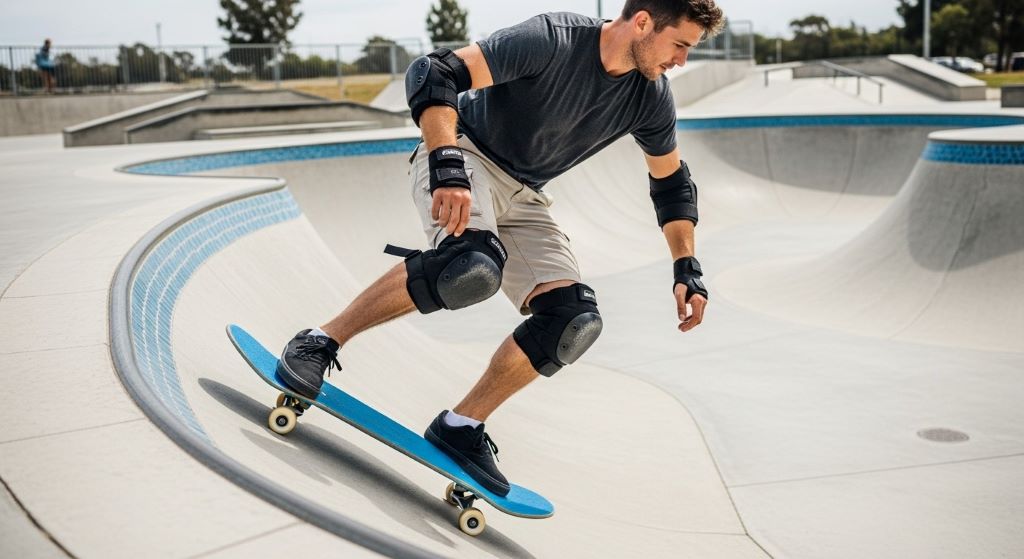
Skateboarding, rollerblading, and other skating sports are thrilling activities. However, they come with real risks. Falls happen, sometimes hard and fast. The right protective gear can mean the difference between a minor bruise and a serious injury. Choosing the correct pad size is one of the most important decisions a skater can make, yet many people guess their size or buy whatever is available.
This article walks you through everything you need to know about finding pads that fit correctly. From measuring your body to understanding protection levels, you’ll have all the information needed to make a confident purchase.
Why Pad Size Matters More Than You Think
Many skaters treat pad sizing as an afterthought. They focus on boards, wheels, or shoes and grab any available pads without much thought. This approach is a mistake that can lead to serious consequences.
Pads that are too small don’t cover the right areas. They shift during movement and leave vulnerable spots exposed. When you fall, the pad may have already moved out of position. Therefore, the impact hits unprotected skin and bone directly.
Pads that are too large create different problems. Excess padding bunches up and restricts natural movement. This restriction can actually cause falls by limiting how freely your legs and arms move. Additionally, oversized pads feel uncomfortable and many skaters end up removing them entirely, which defeats their purpose.
The right size stays in place, covers the correct zones, and allows full range of motion. A proper fit gives you confidence to push your limits while keeping your body protected. This confidence is part of what makes skating enjoyable.
The Main Types of Skate Pads You’ll Need
Before measuring yourself, it helps to understand which pads you’re shopping for. Each type protects a different area and fits differently on your body.
Knee pads are the most essential protective gear for most skaters. They cover the kneecap and surrounding soft tissue. A proper fit keeps the hard cap centered over your kneecap at all times, even during crouching and bending.
Elbow pads protect one of the most commonly injured areas in skating. When you extend your arms to break a fall, elbows absorb tremendous impact. These pads wrap around the elbow joint and need to stay centered even as your arm bends repeatedly.
Wrist guards aren’t technically pads, but they’re equally important. Broken wrists are among the most common skating injuries. Guards stabilize your wrist joint during impact and prevent the bending that causes fractures.
Hip pads protect the hip bones and tailbone area. These are particularly valuable for beginners learning new tricks. Falls onto hard surfaces at hip height can cause serious bone injuries without proper padding.
Helmets fall into a separate category entirely and require their own sizing process based on head circumference.
How to Take Accurate Body Measurements
Getting accurate measurements is the foundation of finding the right pad size. You’ll need a flexible measuring tape, a mirror or a friend to help, and a few minutes of time.
For knee pad sizing, measure the circumference of your knee at the center of the kneecap. Take this measurement while standing with your leg straight. Some brands also ask for the circumference just above and just below the knee. Having all three numbers gives you the most accurate fit.
For elbow pad sizing, bend your arm to a 90-degree angle. Measure the circumference directly at the point of your elbow. This bent-arm measurement reflects how the pad will fit during actual skating movements.
For wrist guard sizing, measure the circumference of your wrist just below the wrist bones. Compare this number to the sizing guidelines provided by the brand you’re considering.
For hip pad sizing, measure your waist and hip circumference at the widest point. Hip pads are usually sized in ranges similar to shorts or pants, so these measurements translate directly.
Write all your measurements down before you start shopping. Having them ready prevents guesswork and makes comparing sizes much faster.
Reading a Pad Size Chart the Right Way
Once you have your measurements, the next step is comparing them to a pad size chart. However, not all charts work the same way. Understanding how to read them correctly saves you from costly mistakes.
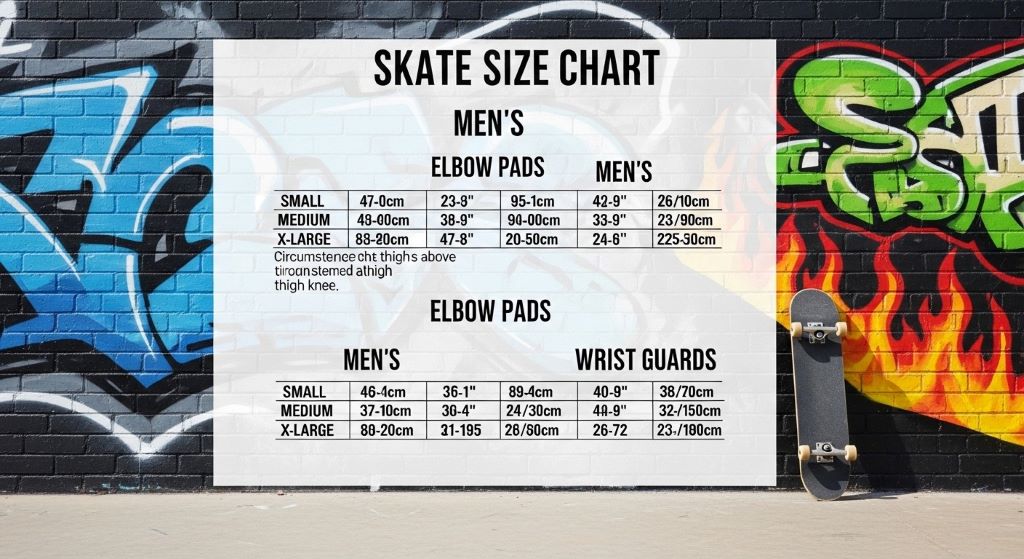
Most brands use a simple size range system. Each size corresponds to a measurement range in either inches or centimeters. For example, a medium knee pad might fit knee circumferences between 13 and 15 inches. If your measurement falls within that range, medium is likely your correct size.
Some brands provide overlapping ranges. This means a measurement of 14.5 inches might fit both a medium and a large in their system. When this happens, consider your body type and skating style. Heavier skaters or those doing more aggressive skating usually benefit from going up one size for additional coverage. Lighter skaters or those doing casual riding can often stay with the smaller option.
Pay close attention to whether the chart lists measurements in inches or centimeters. Mixing up units is one of the most common sizing errors. If your tape measure only shows one unit, use a simple conversion to get both numbers before you start comparing.
Some advanced pad size charts also include weight recommendations alongside circumference measurements. Weight can affect how tightly a pad should fit, particularly for knee and hip protection. Therefore, using both measurement types together gives a more accurate result than relying on just one.
Understanding How Different Brands Size Their Pads
Brand sizing varies significantly in the skating world. A medium from one company might fit the same as a large from another. This inconsistency frustrates many shoppers, but it’s easy to navigate once you understand what to look for.
Always go by measurements rather than the letter or number size listed on the package. Two brands might both label a pad as “large,” but if you check their individual size charts, the measurement ranges can differ by several inches. Therefore, relying on your own measurements rather than size labels is always the smarter approach.
European and Asian brands often size smaller than American brands. If you’re purchasing from an international company, this difference matters. Go up one size as a general starting point, and always verify against their specific pad size chart before confirming your order.
Some brands specialize in a particular skating discipline. Street skating pads often fit differently than vert ramp or roller derby pads. The intended use affects the cut, coverage area, and strapping system, all of which influence how the sizing translates to your body.
Reading customer reviews specifically about sizing is incredibly helpful. Shoppers often mention whether a brand runs large, small, or true to size. This real-world feedback adds valuable context beyond what any chart can provide.
The Skate Pad Fit Guide for Common Body Types
Body proportions vary widely among men, and standard sizing doesn’t always account for this reality. A skate pad fit guide that addresses different body types helps skaters find more accurate solutions.
If you have larger thighs relative to your knee size, knee pads might feel tight at the base even when they fit well at the cap. Look for brands that offer pads with wider strapping systems or extended lower panels. Some brands offer anatomical cuts designed for athletic builds.
If you have long limbs, the distance between your knee and shin matters. Longer shin coverage prevents pads from sliding upward during use. Look for pads with extended lower coverage and longer straps.
If you have a shorter, more compact build, standard adult sizes might be too large even at the smallest end of the range. Some brands offer sizes specifically for smaller adult frames. Don’t be tempted to buy youth sizes just because they fit in circumference. Youth pads are designed for lighter body weights and may not provide adequate protection for adult impacts.
If you carry extra weight, prioritize coverage and strap quality. More surface area in contact with the pad means better impact distribution. Adjustable straps with strong closures prevent the pad from shifting under higher stress loads.
Testing the Fit Before You Commit
Whenever possible, try pads on before purchasing. Online shopping is convenient, but nothing replaces physically wearing a pad to assess the fit.
When trying knee pads, put them on and immediately bend your knee several times. The hard cap should stay centered over your kneecap throughout the full range of motion. If it slides to the side or shifts upward, the fit isn’t right for your body regardless of what the size chart suggests.
Next, crouch down into a skating position. This is the stance your body will be in during actual use. The pad should feel snug but not restrictive. You should feel secure support without any digging or pinching at the edges.
Stand back up and check the position again. Pads that shift significantly during this simple movement will perform much worse during the dynamic motions of actual skating.
For elbow pads, bend and extend your arm repeatedly. The pad should move naturally with your joint without bunching at the elbow crease. Run your fingers along the edges to check for pressure points that might become uncomfortable over a long skating session.
Straps, Closures, and How They Affect Fit
The strap system on a pad is just as important as the size itself. Poor straps can make even a perfectly sized pad perform badly.
Velcro straps are the most common closure type. They’re easy to adjust and allow fine-tuning on the spot. However, velcro wears out over time and loses its grip. When evaluating pads, check the quality and width of the velcro. Wider strips hold more reliably than narrow ones.
Buckle systems provide a more secure and consistent closure. They’re particularly valuable for aggressive skating where falls are harder and more frequent. Buckles hold under impact better than velcro in most cases.
Some pads use a sleeve design without traditional straps. A stretchy fabric sleeve holds the pad in position through compression. These designs work well for lighter skating but may not provide enough security for more aggressive styles.
Additionally, the number of straps affects stability. Single-strap pads move more than double or triple-strap designs. More strap contact points distribute pressure more evenly and keep the pad centered under stress.
Caring for Your Pads to Maintain the Right Fit
Pads change over time, and so does their fit. Understanding how materials age helps you know when it’s time for a replacement.
Foam padding compresses with regular use. Over time, it loses its original thickness and cushioning ability. A pad that once fit perfectly might feel loose after a season of heavy use. Check the foam condition regularly by pressing on the padding and observing how quickly it rebounds.
Fabric covers stretch with use, which can also change the fit. Washing pads according to manufacturer instructions helps maintain the fabric’s elasticity and shape. Avoid high heat in the dryer, which degrades both foam and fabric faster.
Straps wear out independently of the main pad body. Sometimes, replacing just the strap hardware can restore a pad’s fit and function. However, when the foam is worn, the entire pad needs replacement.
As a general guideline, replace pads after any significant impact that compressed the foam substantially. A pad that absorbed a hard fall may look fine on the outside but have compromised foam inside.
Putting It All Together for the Best Protection
Choosing the right pad size doesn’t have to be complicated. Take your measurements carefully, compare them to a current pad size chart, and always prioritize measurements over label sizes.
Consider your skating style and body type throughout the process. Think about the strap system, material quality, and brand reputation. Read reviews from other skaters with similar body types and skating styles.
When in doubt between two sizes, think about your skating discipline. More aggressive skating generally calls for the slightly larger option. Casual or recreational skating can often work well with the more precise size.
Furthermore, remember that no pad works if you don’t wear it. Comfort and proper fit encourage consistent use. A pad you actually wear every session is infinitely more protective than a technically superior pad that sits in your bag because it’s uncomfortable.
Conclusion
Finding the right skate pad size is a straightforward process when you approach it methodically. Start by measuring the relevant body parts accurately. Then compare those numbers to a reliable pad size chart from the brand you’re considering.
Remember that brand sizing varies and that label sizes mean less than actual measurements. A good skate pad fit guide always starts with your body’s unique dimensions, not assumptions based on your clothing size or what you’ve worn before.
Take time to test the fit through realistic movements. Pay attention to strap quality and closure systems. Replace pads when they show significant wear or after major impacts.
Protecting yourself properly is a sign of a smart, experienced skater. The right pads keep you skating longer, recovering faster, and enjoying every session with confidence.
Frequently Asked Questions
Can I use women’s skate pads if they fit my measurements better?
Yes, you can. The most important factor is that the pad fits your measurements correctly and stays in position during skating. If a women’s pad matches your measurements better than any men’s option, it will likely provide equal or better protection. Focus on fit, coverage, and impact rating rather than the intended gender of the product.
How tight should knee pads feel when I first put them on?
Knee pads should feel snug and secure, but not uncomfortable. You should be able to slip two fingers under the strap when it’s fastened. If you can’t fit even one finger, the pad is too tight and may restrict circulation. If you can fit your entire hand, the pad is too loose and won’t stay in position during a fall.
Do skate pads shrink or stretch after washing?
Most quality pads maintain their size with proper care. However, high heat causes both foam and fabric to degrade. Always wash pads in cold water on a gentle cycle and air dry them. Avoid putting them in a hot dryer. Following these steps preserves the fit and extends the life of the padding.
Should I buy a larger size if I plan to wear them over pants or leggings?
Yes, this is a smart consideration. If you typically skate in thick pants or padded leggings, going up half a size or one full size is a reasonable adjustment. Try the pads on while wearing your typical skating outfit to get the most accurate read on how they’ll actually fit during use.
How often should men replace their skate pads?
For regular skaters, replacing pads every one to two years is a reasonable guideline. Heavy users or those doing aggressive skating may need replacements sooner. Always replace pads after a severe fall that compressed the foam deeply, even if they look undamaged. Compromised foam provides significantly less protection than new padding.
Related Topics:
How to Pick the Right Surfboard for Skill Level
Top 5 Eco-Friendly Skateboard Brands Texas Skaters Adore