Takashi Murakami, the renowned Japanese artist known for his vibrant and whimsical creations, has a unique artistic process that merges traditional Japanese techniques with contemporary pop culture influences. His flower masterpieces, often featuring smiling blossoms, are iconic symbols of his artistic style. This article delves into the intricate process behind creating these floral wonders, exploring the materials, techniques, and inspiration that bring them to life.
Inspiration and Conceptualization:
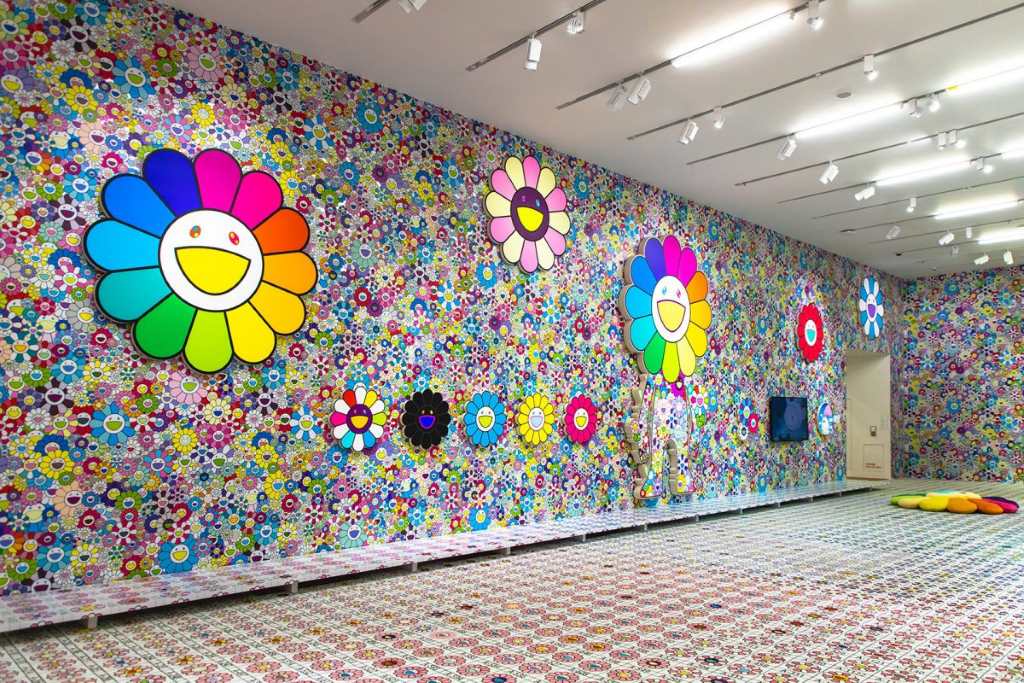
Murakami’s flower masterpieces often begin with a concept or idea that reflects his artistic vision. He draws inspiration from a wide range of sources, including Japanese art history, Buddhist philosophy, manga, anime, and even contemporary fashion trends. For instance, the rainbow flower with smiley face meaning embodies a blend of these influences, symbolizing joy and positivity. Once an idea takes shape, Murakami creates initial sketches and digital mock-ups to visualize the composition and color palette of the artwork.
Materials and Tools:
The foundation of Murakami’s flower masterpieces is typically a large canvas or panel, often made of high-quality materials such as linen or wood. He utilizes a variety of paints, including acrylics, oils, and spray paints, to achieve the vibrant colors and textures characteristic of his work. In addition to traditional brushes, Murakami employs airbrushes and stencils to create intricate details and patterns.
The Painting Process:
Murakami’s painting process is a meticulous and layered affair. He begins by applying a base coat of paint to the canvas, creating a smooth and even surface for the subsequent layers. Then, he meticulously sketches the outlines of the flowers and other elements using pencils or charcoal. Once the outlines are established, Murakami starts filling in the shapes with colors, gradually building up layers to achieve the desired depth and vibrancy.
One of the defining features of Murakami’s flower masterpieces is the use of “superflat” technique, a style he pioneered that involves flattening the perspective and eliminating the illusion of depth. This technique creates a unique visual effect where the flowers appear to float on the surface of the canvas, emphasizing their graphic quality.
Details and Finishing Touches:
Murakami pays meticulous attention to detail, carefully rendering the petals, stems, leaves, and other elements of the flowers. He often incorporates intricate patterns and designs, such as dots, stripes, and spirals, to add visual interest and complexity to the artwork. To enhance the texture and dimensionality of the flowers, Murakami may use techniques such as impasto, where thick layers of paint are applied to create raised surfaces.
Once the painting is complete, Murakami applies a protective varnish to seal and preserve the artwork. He may also add his signature and other identifying marks, such as edition numbers or authentication stamps.
Collaborative Efforts:
Murakami’s studio, Kaikai Kiki Co., Ltd., plays a crucial role in the creation of his flower masterpieces. A team of skilled artisans and technicians assists Murakami throughout the process, from preparing the canvases to mixing paints and applying finishes. The studio also handles the production of limited-edition prints and sculptures based on Murakami’s original artworks.
Exhibitions and Legacy:
Murakami’s flower masterpieces have been exhibited in prestigious museums and galleries worldwide, captivating audiences with their vibrant colors, playful imagery, and cultural references. His works have become highly sought-after collectibles, with some pieces fetching millions of dollars at auctions. Murakami’s influence extends beyond the art world, as his designs have been featured in collaborations with fashion brands, musicians, and even the anime industry.
Conclusion
Creating Murakami’s flower masterpieces is a complex and multifaceted process that involves a blend of artistic vision, technical skill, and collaborative effort. From the initial concept to the final varnish, each step is meticulously executed to bring these iconic artworks to life. Murakami’s dedication to his craft, coupled with his innovative approach to art, has solidified his position as one of the most influential artists of our time. His flower masterpieces continue to inspire and captivate audiences worldwide, serving as a testament to his enduring legacy.