

You just landed a trophy catch, the net did its job perfectly, and now it is tossed in a damp corner of the boat, tangled with hooks and crusted with fish slime. This is the exact moment your net begins to die. A fishing net is not a disposable item; it is a precision tool that demands care. If you want to maintain fishing net longevity, you need to treat it like the investment it is. The problem is that neglect reduces a quality net to a frayed, rotting mess within a single season. The solution is a consistent, simple care routine that adds years of reliable service. This guide delivers everything you need to know—without the fluff.
What Causes Fishing Nets to Deteriorate Quickly?
Sunlight and UV Degradation
Ultraviolet rays are the silent assassins of nylon and polyethylene netting. Even a few hours of direct midday sun can weaken the fibers, making them brittle and prone to snapping under tension. A net left on the deck will lose its tensile strength within weeks of repeated exposure. UV damage is cumulative and irreversible, turning a strong mesh into fragile mesh that fails when you need it most.
Salt and Chemical Corrosion
Saltwater crystals are hygroscopic, meaning they draw moisture back into the fibers even after the net looks dry. This constant cycle of wetting and drying accelerates rot. Additionally, fish slime, blood, and bait residue contain enzymes and bacteria that break down natural and synthetic materials over time. Gasoline, oil, and sunscreen residue also chemically attack rubber coatings and handle wraps.
Physical Abrasion and Snags
Dragging a net across rough concrete, gravel, or dock cleats abrades the outer coating and nicks individual threads. Hooks, lures, and gaff points left embedded in the mesh create stress points where tears originate. Improper storage—like stuffing a wet net into a cramped tackle box—causes permanent kinks and weakening of the hoop and handle joints.
How Often Should You Clean Your Fishing Net?
After Every Saltwater Session
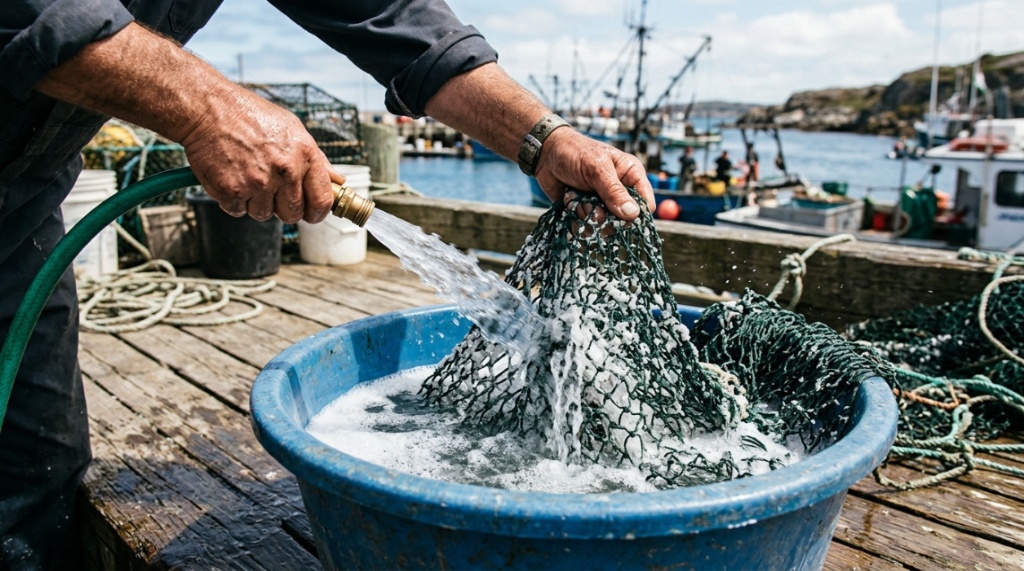
A complete rinse with fresh water is mandatory after every saltwater use. Do not wait until the end of the day. Rinse immediately to flush out salt crystals, sand, and organic debris. Use a garden hose with a spray nozzle, working water through the entire mesh from both sides. Pay extra attention to the handle and the hoop where salt tends to pool.
After Freshwater and Muddy Conditions
Freshwater nets still need cleaning. Mud, algae, and plant matter can cling to the netting and dry into a cement-like crust that clogs the mesh and stains the fibers. A quick rinse and gentle scrub with a soft brush removes these residues before they harden. Do this even if the water looked clean—microscopic particles still accumulate.
Weekly Deep Cleaning for Heavy Use
If you fish multiple times per week, schedule a weekly deep cleaning. Fill a bucket with lukewarm water and mild dish soap (avoid harsh detergents that strip UV protectants). Submerge the net and agitate it to loosen embedded grime. Use a soft brush or your hands to work the soap through the knots. Rinse thoroughly until all soap residue is gone.
What Is the Correct Way to Dry a Fishing Net?
Air Drying Over Mechanical Drying
Never use a dryer, heater, or direct sunlight to dry your net. High heat melts or warps synthetic fibers and degrades rubber coatings. Air drying in a shaded, well-ventilated area is the only safe method. Hang the net by the handle or hoop so that the mesh hangs freely without bunching. This allows air to circulate around every strand.
The Shake and Spread Technique
Before hanging, give the net a firm shake to remove excess water. Then spread the mesh open as wide as possible. Bunched netting retains moisture in the folds, leading to mildew and rot. For large landing nets, drape them over a drying rack or a clean horizontal surface. Rotate the net halfway through drying to ensure even moisture evaporation.
Patience Is Key
Drying can take several hours in humid conditions. Do not store the net until it is completely dry to the touch, including the handle grip and the hoop joint. A partially dry net stored in a bag or garage will develop a musty smell and weakened fibers within days. When in doubt, let it dry an extra hour.
How Do You Store a Fishing Net to Prevent Damage?
Hang It, Don’t Stuff It
The single best storage method is hanging. Use a hook, peg, or wall mount to suspend the net by the handle or the end loop. This keeps the mesh fully deployed and off the ground. Stuffing a net into a bucket, duffel bag, or drawer crushes the mesh and creates permanent creases that weaken the material.
Indoor Storage for Off-Season
During months when you are not fishing, store the net indoors in a climate-controlled area. Avoid attics, basements, or garages that experience extreme temperature swings and high humidity. The net should be clean, dry, and stored away from direct sunlight. Cover it loosely with a breathable cotton cloth to keep off dust while allowing air flow.
Use a Net Bag for Short-Term Storage
If you must store the net in a vehicle or gear bag, use a dedicated net bag made from breathable mesh. These bags protect the net from snags, dirt, and UV exposure while allowing moisture to escape. Never seal a damp net in a plastic bag—this creates a sauna that accelerates mildew growth.
Which Cleaning Products Are Safe for Fishing Nets?
Mild Dish Soap and Water
The safest and most effective cleaner is mild dish soap mixed with lukewarm water. It breaks down fish oils, slime, and dirt without damaging the fibers or coatings. Use a ratio of one teaspoon of soap per gallon of water. Avoid antibacterial soaps that contain harsh chemicals like triclosan.
White Vinegar Solution for Odors
If your net has persistent fishy odors even after cleaning, use a diluted white vinegar solution. Mix one part white vinegar with three parts water. Soak the net for 15 minutes, then rinse thoroughly with fresh water. Vinegar neutralizes odors and has mild antibacterial properties without harming synthetic materials.
Avoid Bleach, Fabric Softeners, and Enzymatic Cleaners
Bleach breaks down nylon and polyethylene fibers irreversibly. Fabric softeners coat the mesh with a waxy residue that reduces water shedding. Enzymatic cleaners, while great for stains, can weaken the structural integrity of the knots. Stick to simple, chemical-free solutions for the longest net life.
How Can You Repair a Torn Fishing Net at Home?
Small Tears and Snags
A small tear of less than two inches can be stitched with nylon thread using a basic overhand stitch. Use a needle that is sharp enough to pass through the mesh without tearing surrounding fibers. Match the thread color to the netting for a clean repair. Stitch in the same pattern as the original mesh to maintain strength.
Larger Holes and Missing Sections
For holes larger than two inches, you need a patch of matching netting material. Cut a patch that overlaps the hole by at least one inch on all sides. Sew the patch in place using a running stitch around the entire perimeter. Ensure every edge is secured to prevent the patch from peeling off under load.
When to Replace Instead of Repair
If the netting is brittle, discolored, or has multiple tears in different spots, repair is a temporary fix. The structural integrity of the net is already compromised. At this point, replacement netting or a new net is the safer choice. Fish-handling safety matters more than squeezing one more season out of worn gear.
Can Washing a Fishing Net in a Machine Damage It?
The Risks of Machine Washing
Top-loading washing machines with agitators can snag, twist, and stretch netting, causing permanent damage. The high spin cycle puts excessive stress on the knots and fibers. Heat from wash and dry cycles can distort the shape of the hoop and handle. In short, machine washing is not recommended for any style of fishing net.
Front-Loading Machines Are Safer but Still Risky
A front-loading machine without an agitator is less risky than a top-loader, but still not ideal. The tumbling action can cause the net to ball up and create tension points. If you must use a front-loader, place the net in a mesh laundry bag, use cold water, and select a gentle cycle with no spin. Skip the dryer entirely.
Hand Washing Is Always Superior
Hand washing gives you complete control over the cleaning process. You can target specific dirty areas, avoid tangling the mesh, and use the correct water temperature. It takes less than ten minutes and ensures your net is treated with the care it deserves. Trust the hands-on approach for the best results.
Why Does Knot Integrity Matter for Net Longevity?
Knots Are the Weakest Points
Every knot in a fishing net creates a stress concentration point. When fibers weaken, it is almost always at a knot where the material is bent and compressed. Loose or poorly tied knots slip under the weight of a fish, causing the mesh to open. Tight, consistent knots maintain the net’s structure and prevent catastrophic failure.
Inspect Knots Regularly
During your weekly cleaning, run your fingers along the mesh and feel for loose or swollen knots. A knot that feels different from its neighbors needs attention. Tighten it by gently pulling the four strands that form the knot. If the knot is too loose to hold, cut it out and retie it using a standard sheet bend or fisherman’s knot.
Treat Knots with Silicone Spray
After drying, apply a light silicone spray to the knots. Silicone lubricates the fibers, reducing friction and preventing the knots from cinching too tightly. It also adds a protective water-repellent layer that helps the net shed water faster. Spray lightly and wipe off any excess with a clean cloth.
What Role Does the Hoop and Handle Play in Net Care?
Rust and Corrosion Prevention
Metal hoops, especially aluminum and steel, are prone to rust and corrosion. After every rinse, dry the hoop with a towel. Apply a thin coat of marine-grade lubricant or corrosion inhibitor to the hoop and any metal fittings. Pay attention to the rivets and hinge points where moisture gets trapped.
Handle Grip Maintenance
Foam, rubber, and cork handles degrade when left wet. Foam grips absorb water and become spongy, promoting bacterial growth. Rubber grips can become sticky and discolored. Cork dries out and cracks. Wipe handles down after every use and store them in a dry location. Treat cork handles annually with a cork sealer to prevent drying.
Hoop Joint and Pivot Points
The joint where the hoop meets the handle experiences mechanical stress every time a fish is landed. Dirt and grit accumulate in these pivot points, causing friction and wear. Flush the joints with fresh water and apply a few drops of silicone lubricant to keep the mechanism smooth. A stiff joint adds strain to the netting during use.
How to Extend the Life of a Rubber or Coated Net?
Rubber Netting Benefits and Vulnerabilities
Rubber nets are gentle on fish and resistant to tangling, but they are vulnerable to UV light and heat. Never leave a rubber net in a hot car or under direct sunlight for extended periods. The rubber hardens, cracks, and becomes brittle. Store rubber nets in a cool, dark place to preserve flexibility.
Coated Mesh Nets
Some nets feature a rubber or vinyl coating over the nylon mesh. This coating adds durability but can peel or chip if the net is folded sharply. Avoid bending the hoop to force a coated net into a tight space. When cleaning, use only soft brushes to avoid scratching the coating. Scratches allow moisture to penetrate the underlying mesh.
Re-Coating Options
Once the coating begins to peel, you can prolong the net’s life by applying a thin layer of rubberized spray coating designed for nets. Clean the area thoroughly, mask off surrounding sections, and apply two light coats. This is a temporary fix, not a permanent solution, but it can buy you another season of use.
Before focusing on upkeep, make sure you also learn how to stop losing your fishing net while out on the water.
When Is It Time to Replace Your Fishing Net?
Visual Signs of Failure
If the netting shows widespread discoloration (yellowing or browning), stiffening, or a powdery texture, the fibers are breaking down. Small tears that keep appearing after repair indicate systemic weakness. A net that no longer holds its shape when lifted is structurally compromised and unsafe for landing fish.
Performance Signs of Failure
Does the net feel heavier than it used to? Does the mesh sag in the middle? Do you notice fibers snapping when you run your hand over the net? These are performance indicators that the net has lost its tensile strength. A net that fails while landing a large fish can cost you the catch and potentially cause injury.
The Two-Year Rule of Thumb
With proper care, a quality fishing net lasts two to three years of regular use. If you fish more than 50 days per year, consider replacing the net annually. If you fish occasionally, a well-maintained net can last five years. Track how long you have owned the net and compare its condition to these benchmarks.
To maintain fishing net longevity, consistent cleaning, proper drying, smart storage, and timely repairs are non-negotiable. These steps keep your net reliable season after season.
Frequently Asked Questions
How long does a fishing net last with proper care?
With proper care, a quality fishing net typically lasts two to three years of regular use. Lightly used nets with excellent maintenance can last up to five years before needing replacement.
Can I use bleach to clean my fishing net?
No. Bleach degrades nylon and polyethylene fibers, weakening the netting permanently. Use mild dish soap and water, or a diluted white vinegar solution for stubborn odors.
Is it safe to dry a fishing net in the sun?
No. Direct sunlight causes UV damage that makes the netting brittle and prone to tearing. Always dry your net in a shaded, well-ventilated area away from direct rays.
How do I remove fish smell from my landing net?
Soak the net in a solution of one part white vinegar to three parts water for 15 minutes. Rinse thoroughly with fresh water and air dry. Vinegar neutralizes odors without harming the fibers.
Can I repair a large tear in my fishing net?
Yes, if the tear is under two inches, you can stitch it with nylon thread. For larger holes, use a matching netting patch sewn around the perimeter. If the netting is brittle, replace the entire net.
What is the best way to store a fishing net for winter?
Clean and dry the net completely, then hang it indoors in a climate-controlled area away from direct sunlight. Cover loosely with a breathable cloth to prevent dust buildup.
Should I oil the metal parts of my fishing net?
Yes. Apply a thin coat of marine-grade lubricant or corrosion inhibitor to the metal hoop, rivets, and pivot points after each cleaning to prevent rust and ensure smooth operation.


